











Inspiration from the Participation ABC Training: Meaningful Participation Benefits Everyone
7 May 2026
Photo: Kertu Lepvalts (Kertugram)
The Participation ABC Training is now underway! We’re sharing key takeaways, practical tips, and valuable resources, along with insights on why and how we need to treat participation as a right rather than just a “nice-to-have.”
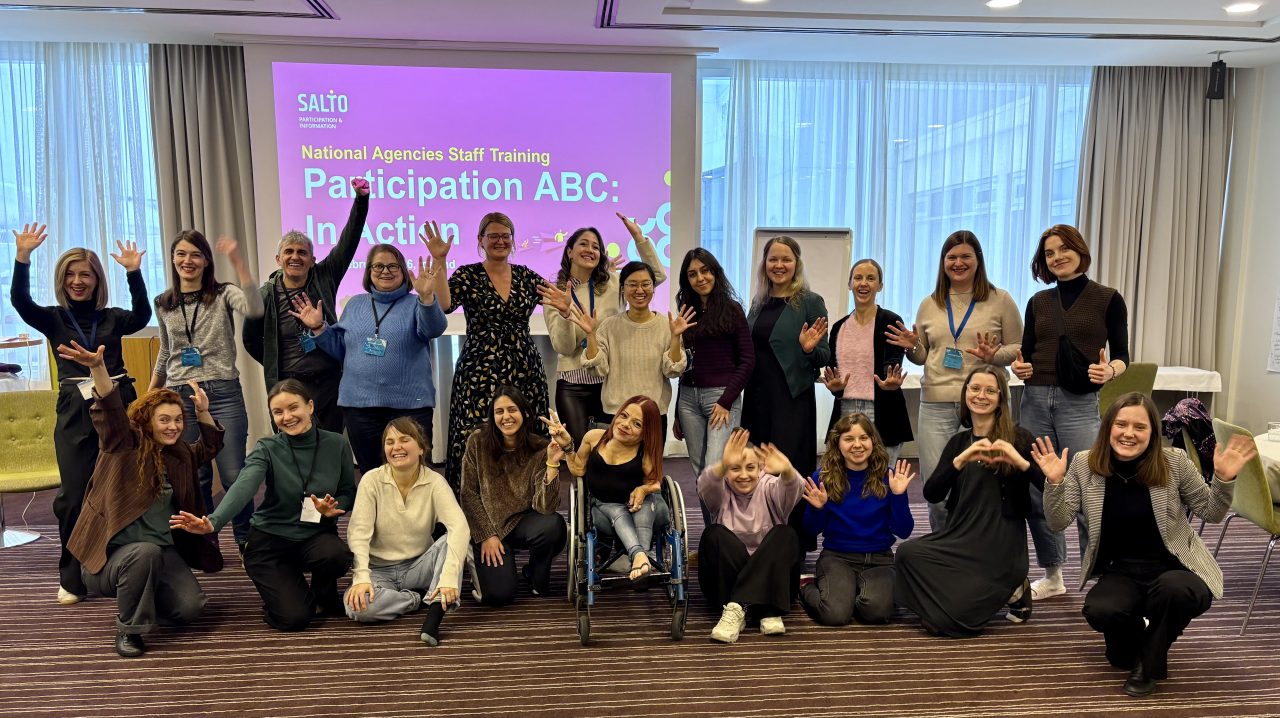
The training kicked off in February 2026 in Iceland when National Agency (NA) staff from across Europe gathered to explore how youth participation can become a core part of everyday work – not just a specialised topic, but a shared responsibility across roles, teams, and levels of decision-making.
The core message at the training was clear. Participation is not optional; it is a right, a necessity, and a strategic advantage for organisations and institutions that want to stay relevant, legitimate, and impactful.
“The training programme ‘Participation ABC: In Action’ was designed as an introductory training for National Agency staff who want to better understand and apply the Erasmus+ Youth priority on participation in democratic life, civic engagement and common values. While many tools already exist, staff often lack the space to explore this priority in depth and translate it into their daily work,” comments Hannah Sattlecker from SALTO Participation and Information Resource Centre (SALTO PI).
This training helped create that space. “We unpacked key concepts, challenged common myths about youth participation, and explored practical ways to integrate participation into projects and decision-making processes within National Agencies,” she explains, summarising the aims of the training.
“One principle guided us throughout: small steps matter – let’s make them meaningful,”
Participants engaged with real examples, resources from SALTO, and case studies, and began developing small, concrete action plans they can continue working on with mentoring support in the coming months. Find practical questions to guide your planning at the end of this story!
Fostering participation is essential work
Many NA staff and organisations are expected to contribute to youth participation but often lack practical ways to do so. Meanwhile, the policy direction is clear:
- Youth participation is a human right. In Aim 5 of the SALTO Youth Participation Strategy, it is clearly stated that the National Agencies of Erasmus+ and the European Solidarity Corps, as well as other institutions, must involve young people in the management and implementation of programmes and strategic activities designed for them. The principle “Nothing about us without us” applies here clearly.
-
"Youth participation in democratic life is about individual young people and groups of young people having the right, the means, the space, the opportunity and, where necessary, the support to freely express their views, contribute to and influence societal decision making on matters affecting them, and be active within the democratic and civic life of our communities," states the Youth Participation Strategy.
- It’s embedded in the EU Youth Strategy (2019–2027).
- It’s reinforced by Erasmus+ horizontal priorities
- It’s stated in the European Youth Goals.
- It’s emphasised in the European Convention on Human Rights, article 10 (Freedom of expression) and article 11 (Freedom of assembly and association).
- The UN Convention on the Rights of the Child (UNCRC), specifically article 12, is a legally binding international treaty that outlines the fundamental civil, political, economic, social, and cultural rights of everyone under 18.
Participants also explored the RMSOS approach, which is detailed in the Manual on the Revised European Charter on the Participation of Young People in Local and Regional Life. The RMSOS framework to youth participation outlines five key conditions necessary for meaningful youth participation in democratic life and decision-making.
- Right: Participation is a human and civic right.
- Means: Young people need resources, access, and stability.
- Space: Their voices must be heard and taken seriously.
- Opportunity: Systems must be accessible and youth-friendly.
- Support: Institutional, financial, and educational backing is essential.
Without these conditions, participation risks becoming symbolic rather than meaningful.
The message is simple: institutions have an obligation to involve young people in decisions that affect them. Failing to do so risks irrelevance and missed opportunities – not just for young people but for the larger society as a whole.
The value: why participation benefits everyone involved
Participation isn’t just an ethical issue. It’s also very practical and strategic, because research shows it has continuously brought along many benefits. If you want to learn more, see this article in the Participation Resource Pool.
Meaningful participation brings along:
- Better decisions: Policies and programmes become more relevant when informed by young people’s realities.
- Stronger institutions: Participation builds trust, legitimacy, and accountability.
- Youth development: It strengthens skills, confidence, and active citizenship.
- Fairer systems: It redistributes power and challenges exclusion.
At its core, participation is about power and we should all be mindful about who has it and how it’s shared.
Beyond theory: actionable steps for organisations
The Participation ABC training highlighted that participation can happen anywhere and at every level, from informal interactions to formal decision-making. Practical mechanisms already used by many National Agencies include:
- Involving young people in planning and organising events.
- Engaging them in communication strategies.
- Creating youth advisory boards.
- Running consultative meetings.
- Including programme ambassadors in decision-making.
Key areas for embedding participation:
- Development of learning materials.
- Design and delivery of activities.
- Research and evaluation (including participatory research).
- Consultations and strategic planning.
- Internal decision-making processes.
Briefly said, the principle should shift from doing “for” young people to doing things “with” them.
“Before this training, I mainly focused on doing things for youth participation as an NA, but now I realise that involving young people directly may be more meaningful.” –
Participant feedback from the training
Small, meaningful actions
During the Participation ABC training, it was concluded that one does not have to overhaul everything at once. Instead, small actions can be meaningful and quality. From the first training session, four recommendations stood out:
- Start where you already have influence.
- Test small changes in real work contexts.
- Focus on learning through practice, not perfection.
- Ensure participation is genuine, not tokenistic.
As part of the training, a useful check-list was presented, which helps to keep the course.
Can you check them off?
The actions we take involving young people are…
-
Transparent and informative
-
Voluntary
-
Respectful
-
Relevant
-
Youth-friendly
-
Inclusive
-
Supported by training
-
Safe and accountable
Tools and resources you can use immediately
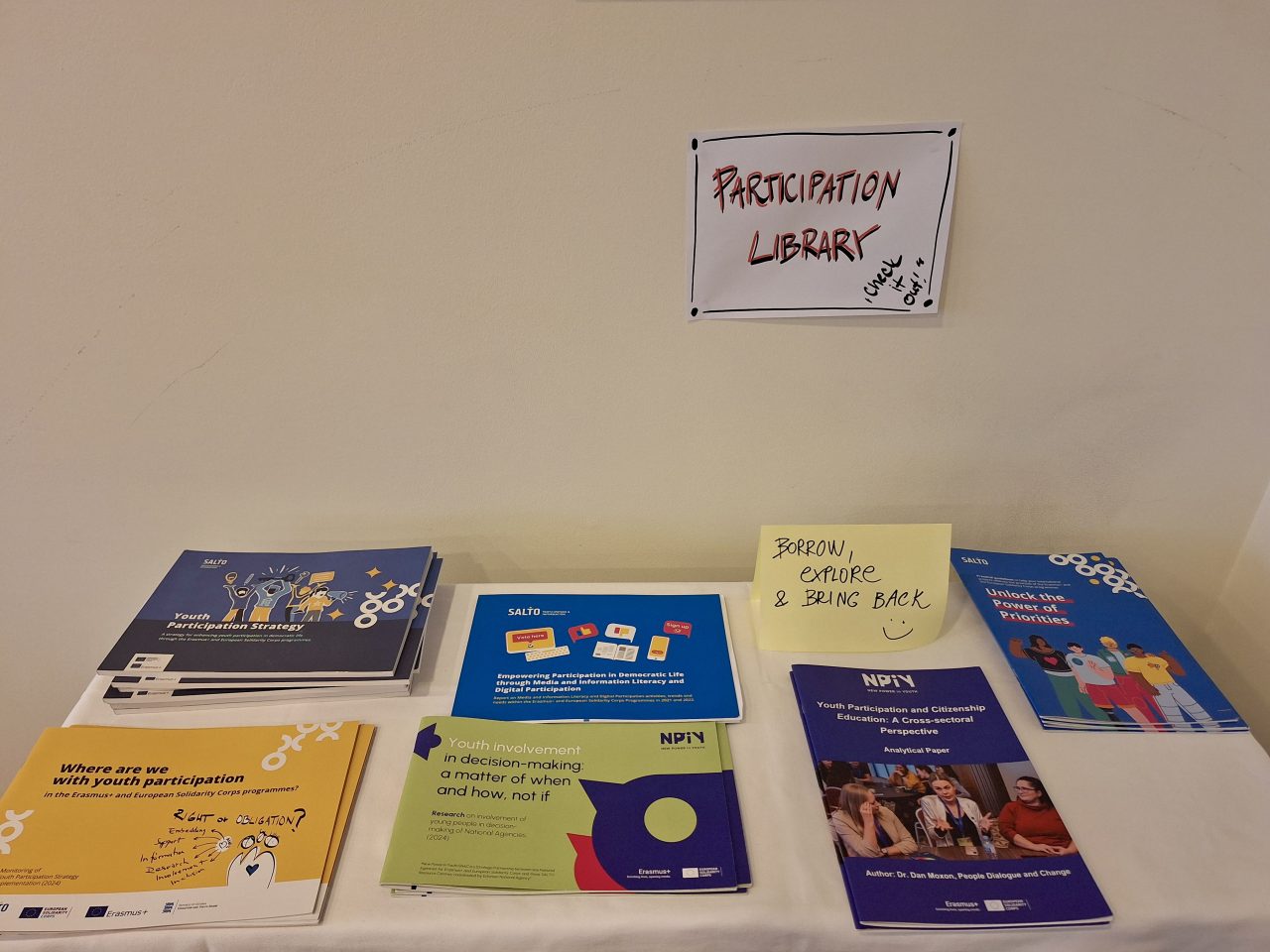
The training connects participants to a range of ready-to-use European resources. Here are some you can explore:
- Youth Participation Strategy: Core framework, including Aim 5 on involving young people in decision-making.
- Monitoring of the Youth Participation Strategy (2024): Shows current gaps and progress.
- Research on Youth Involvement in NAs (2024): Real examples (e.g., advisory boards, junior trainers) and lessons learned.
- Youth Participation Toolkit: Practical guidance, models, and quality standards.
- Practical Guidelines for Erasmus+ & ESC Priorities “Unlock the Power of Priorities”: How to integrate participation into projects.
- Quality Standards for Meaningful Youth Participation – SALTO
These resources are designed for immediate application in the NA work and are also useful for organisations and institutions who work with and for young people.
Looking ahead: building momentum
“Creating a culture of participation is crucial. Involving young people in the decision-making of institutions—including National Agencies—is essential for building their trust in democracy. It is their right to have a say in the processes that affect them, and European Youth programmes need to listen to young people, including through the staff of National Agencies. This way, we develop both the competences of young people to make their voices heard and become active citizens, and the competences of decision-makers and institutions to ensure meaningful participatory processes for young people,” explains Dorina-Alina Beşleaga from SALTOPI.
Beşleaga emphasises that the Participation ABC training isn’t a one-off event. It includes mentoring, follow-up, and implementation support, ensuring ideas turn into practice.
She adds that this training is not only for specialists responsible directly for the participation priority. It is relevant to every role within a National Agency. “When it is done meaningfully, it improves the quality of programmes and strengthens the credibility of the institution. It also does not require big changes to get started. Small, intentional steps can already make a difference. There are practical tools, tested approaches, and European frameworks already available to support this work. Participation is a right, and institutions are responsible for making it real in their daily practice,” she adds.
Small Action – commit to youth participation now
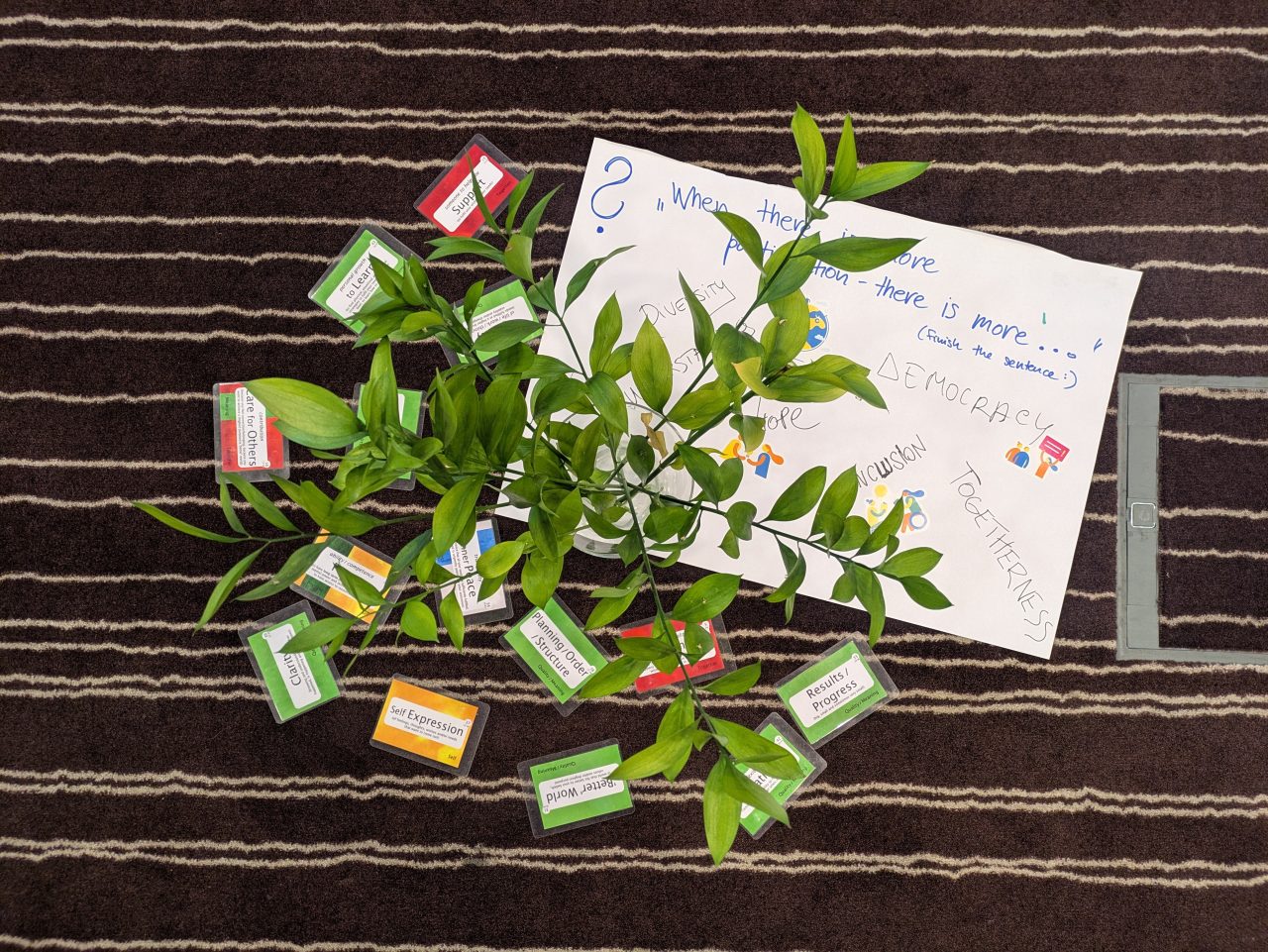
Use the following list as a practical action planning template. The same planning questions were used by participants during the training.
-
Main Goal.
What do you want to achieve?
-
Short Description.
How do you plan to achieve it? Please describe the steps briefly, step by step.
-
Timeline
When do you plan to implement the activity?
-
Young People’s Involvement.
We aim to implement actions that directly and meaningfully involve young people – not just promote youth participation. Please explain how young people will actively take part in your action.
-
Your Learning Goals.
What would you like to learn or try out for the first time when implementing your action?
-
Support You Need.
Is there anything that would support you in the implementation of your activity?
-
Mentoring
Do you have any specific questions or topics you would like to address in the mentoring sessions so far? Please consider whether you or your team would benefit from mentoring and, if so, who might be a suitable mentor.