






Photo: Karoliine Aus
Democratic participation is a recognised priority across Erasmus+, but how can it become a reality in everyday work? Participation Contact Points from National Agencies across Europe believe the answer lies in stronger cooperation, shared ownership and creating opportunities for people to actively take part in shaping decisions.
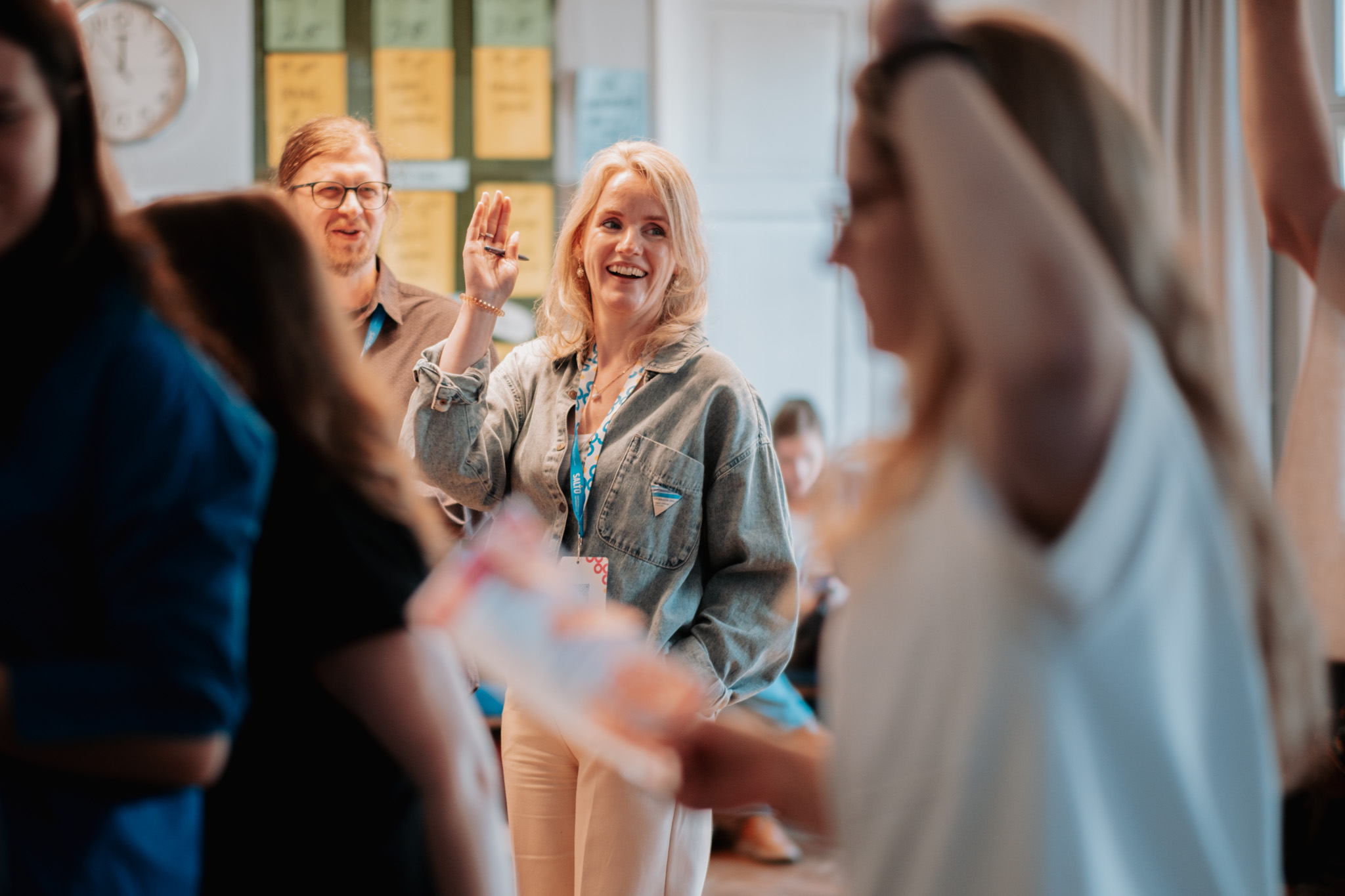
This was one of the key reflections emerging from the third meeting of the NAs Participation Network, which brought together Participation Contact Points from the National Agencies (NAs) of Erasmus+ and the European Solidarity Corps, alongside SALTO Participation and Information (SALTO PI), in Tallinn, Estonia, from 26 to 28 May 2026.
Looking ahead to 2027 and beyond, 35 participants from 24 countries focused on how democratic participation can become more deeply embedded across Erasmus+ and how the growing network of Participation Contact Points (PCPs) can contribute to that goal.
For Joana Freitas, Participation Coordinator at SALTO PI, the evolution of the Network mirrors a broader shift taking place across European programmes.
“One of the joys of my professional life has been working with this group from the very beginning and bearing witness to how PCPs grew into their role, and developed a shared ownership of this mission of using Erasmus+ and the European Solidarity Corps to promote more and better democratic participation,” she said.
When PCPs first started working together in 2024, many were exploring democratic participation as a relatively new field. The role itself was a novelty, and participants came with different levels of experience and different institutional realities.
“When SALTO PI expanded its mission from the youth field to a cross-sectoral approach in 2023, we had very different starting points. National Agency colleagues in the youth field had been working with us on the topic of youth participation since 2018, whereas many colleagues in the education and training fields started a completely new journey on this topic with the creation of the Network,” Freitas explained.
A shared space for learning, cooperation and experimentation
What followed was not simply the creation of the role of Contact Points but the gradual development of a shared safe space for learning, cooperation and experimentation. According to Freitas, the Network had a clear goal of being a community where colleagues could better understand participation, exchange practices, map challenges and collectively identify opportunities for strengthening the priority across Erasmus+.
Today, she sees a community that has moved well beyond its initial phase.
“Seeing how PCPs have have truly embraced their role, both individually and as a Network, to the extent they are now challenging SALTO PI and the Directorate-General for Education, Youth, Sport and Culture (DG EAC) to do more daring things regarding embedding the dimension of democratic participation as a process, not just as a topic or skill, in Erasmus+, not only fills me with pride, but it’s also a reminder to meet people where they are and build the journey forward together.”
This idea of participation as a process, rather than a standalone objective, surfaced repeatedly throughout the discussions.
-
As participants explored future collaborations, reflected on the role of PCPs and discussed the future of Erasmus+, one message became increasingly clear: meaningful participation cannot be built through isolated activities or individual projects alone. It requires relationships, trust and structures that enable people to contribute over time, as well as competences to promote participation from PCPs and openness to sharing power from NA staff.
The meeting also featured input from Yiannis Vacondios from DG EAC, currently the focal point for the participation priority within the Erasmus+ Coordination Unit. During an interactive session featuring updates and a Q&A, he explained that the overall direction is becoming increasingly clear: the participation priority is gaining visibility and strategic importance in the future Erasmus+ programme, as reflected in both the European Commission’s proposal and the Council’s position. However, key aspects of its implementation are still under discussion.
Facilitator and trainer Bětka Wójcik has accompanied the Network through much of its development and has observed this evolution firsthand.
“This professional network is increasingly becoming a community which shares a passion for participation and recognises the potential and value of working together to strengthen it within European Programmes,” she said.
For Wójcik, one of the most significant developments has been the way participation is practised within the Network itself. Rather than simply discussing participation as a concept, members increasingly apply its principles in how they work together.
“Participation is not only the focus of this group. It is also a lived experience and ongoing process within the network itself.”
She points to the growing number of opportunities for members to co-create activities, facilitate discussions, share expertise and take responsibility for shaping the Network’s direction. Over time, this has helped build trust and openness within the group, creating conditions for deeper exchanges and more honest conversations.
“I can see it in the growing trust and openness that has been developing over time in the group, allowing for sharing responsibility and ownership, having difficult discussions, and sharing different perspectives.”
That shift was reflected in one of the most notable features of the programme: an entire morning of sessions facilitated by participants themselves. Six peer-led sessions responded directly to topics colleagues had identified as priorities for learning and exchange, demonstrating the increasing confidence, expertise and ownership that exist within the Network.
The collaborative spirit visible in these sessions also connects to a broader understanding of how participation functions within European programmes.
The network makes participation a more systemic effort
Facilitator and systemic participatory designer Olga Glumac encouraged participants to look at participation as an interconnected process rather than a series of separate activities.
“Co-creation isn’t a single conversation in one place: it snowballs across the system. It builds, step by step, across the system. National Agencies listen to and work with their beneficiaries; those insights travel onward through Participation Contact Points and colleagues; and together they feed into the wider European picture. Each step adds voices and carries them a little further,”
Her perspective highlighted one of the key roles of National Agencies and PCPs: connecting experiences from local and national contexts with European-level discussions. Their close relationship with beneficiaries gives them valuable insight into what makes participation meaningful and inclusive in practice.
“That makes participation a genuinely systemic effort, and the connecting role played by National Agencies and PCPs is a big part of what holds it together. Their closeness to beneficiaries gives them a real feel for what makes participation meaningful and inclusive, and that perspective is a valuable contribution to how we shape priorities together.”
Looking ahead, Glumac also reflected on the importance of maintaining momentum as European priorities continue to evolve.
“As priorities evolve, with democratic participation increasingly sitting alongside themes like preparedness and resilience, it feels worth continuing to nurture this work so its momentum carries on. Co-creation grows when it’s supported and shared.”
Alongside strategic discussions, participants explored practical examples of participation during study visits in Estonia. At the Estonian National Agency, they learned about how cooperation between Erasmus+ and other national stakeholders can boost the uptake of participation-related initiatives, including the Youth Involvement (NOP) initiative, which enables young people to contribute directly to shaping education and youth-related policies. At the Estonian Dialogue Academy, participants explored approaches to dialogue as a format to promote critical thinking, and meaningful democratic participation and civic engagement. They also got inspiration for exercises and formats to embed in their own activities.
The event also included a celebratory evening co-created with a seminar hosted by New Power in Youth, a Strategic Partnership between National Agencies and SALTO Resource Centres. Bringing together more than 100 participation enthusiasts, including Participation Contact Points, youth workers, municipal representatives, researchers and other experts, it created valuable opportunities for networking and collaboration across projects.
As the Network looks towards the future of the horizontal priority from 2027 and beyond, its ambition extends beyond supporting projects that treat democratic participation as a topic, as members recognise that the impact of the Programmes is strongest when participation is not treated as an outcome to achieve, but as a practice that shapes how decisions are made and how communities work together. The annual work programme of the Network will provide new opportunities to explore this, including Participation Labs and Community Meetups.
What did the participants say?
-
“I genuinely believe this network is made up of people who care deeply about the importance of both the priority and the programme. That passion is clearly visible across the network, and I feel privileged to be part of it and contribute in whatever way I can.”
-
“From zero to huge! I think we have built a trusting and collaborative environment, free from competition, where doors, windows and opportunities have been opened to achieve even greater things. Chapeau!”
-
“I feel much more confident sharing my thoughts with this wonderful, supportive and motivated group of people.”
-
“The meeting provided an excellent opportunity to exchange perspectives across different sectors and explore the priority from multiple angles. It also came at an important moment, as the next generation of programmes is being shaped, and it was encouraging to see shared views on changes that could lead to improvements. At the same time, I recognise that the challenges ahead are significant. Professionally, the role of PCP within our National Agency still needs to be further defined and strengthened, but personally, I felt we had a valuable opportunity to express our shared belief in the importance of the participation priority in all its forms.”
-
“I’m returning home inspired and full of ideas that I can put into practice, many of them drawn from my colleagues’ experiences. I’m already planning to follow up with some participants about specific tools and approaches. I also feel more confident about involving colleagues in the different ways this priority can be integrated into our work.”