











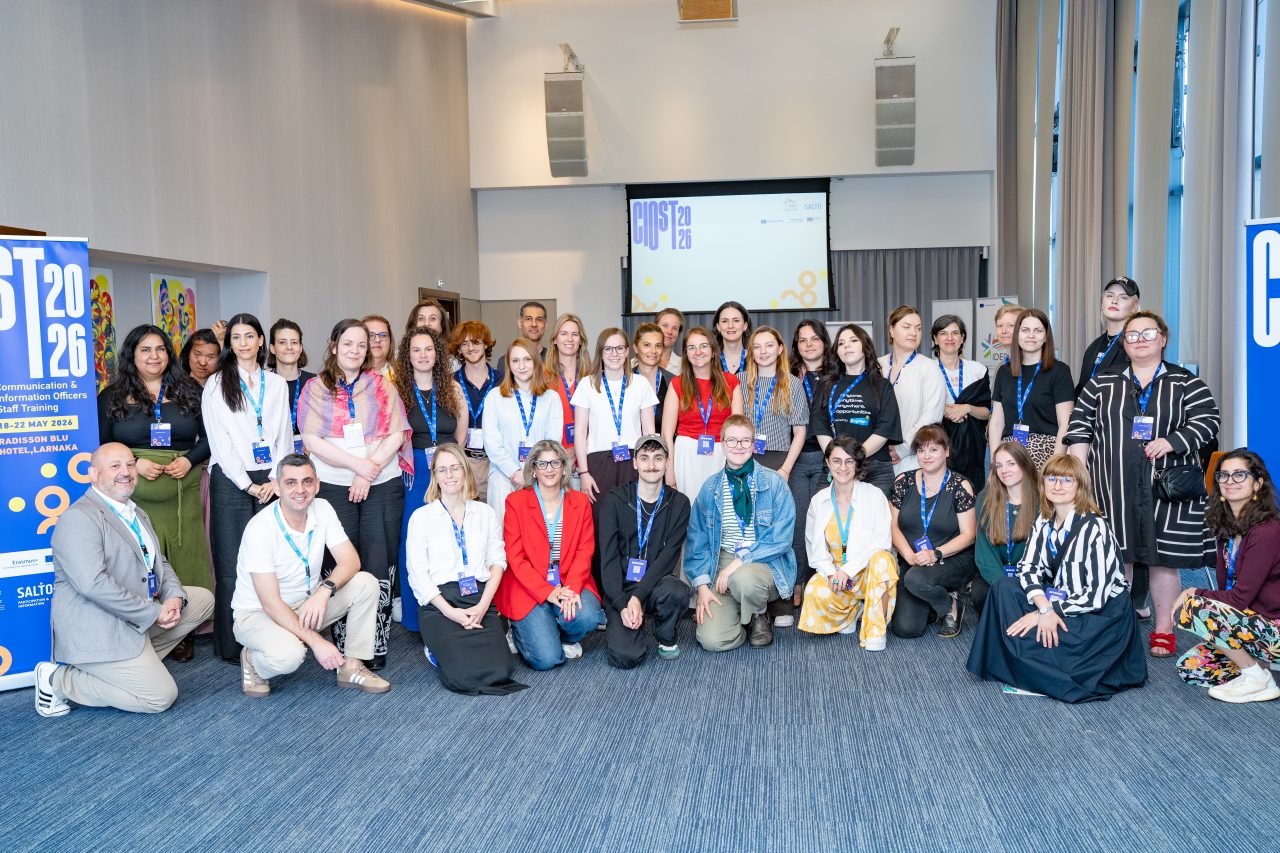
Communication and Information Officers Staff Training in Cyprus. Photo: Cypriot National Agency
Where does human interaction remain relevant in a world where AI is increasingly being presented as a solution for everything? What skills will communication professionals need to remain effective? Will AI take over routine tasks, leaving more space for creativity and strategic thinking? Or will it simply generate more content, more noise, and make authentic communication even harder to achieve?
These questions were at the heart of the Communication and Information Officers Staff Training (CIOST), which took place from 18–22 May in Cyprus, hosted by the Cypriot National Agency for Erasmus+ and the European Solidarity Corps in cooperation with the SALTO Participation and Information Resource Centre (SALTO PI). As participants explored the future of communication, one message emerged clearly: AI is already transforming the profession. What was once seen as a future challenge is now part of everyday work.
The annual training brought together 34 communication professionals from 21 National Agencies, EuroPeers, and Eurodesk to reflect on the skills, tools, and approaches that will shape communication in the years ahead. While technology featured prominently in the discussions, participants repeatedly stressed that as AI becomes more capable, human judgement, critical thinking, creativity, and genuine audience engagement become even more valuable.
AI and digitalisation are reshaping communication
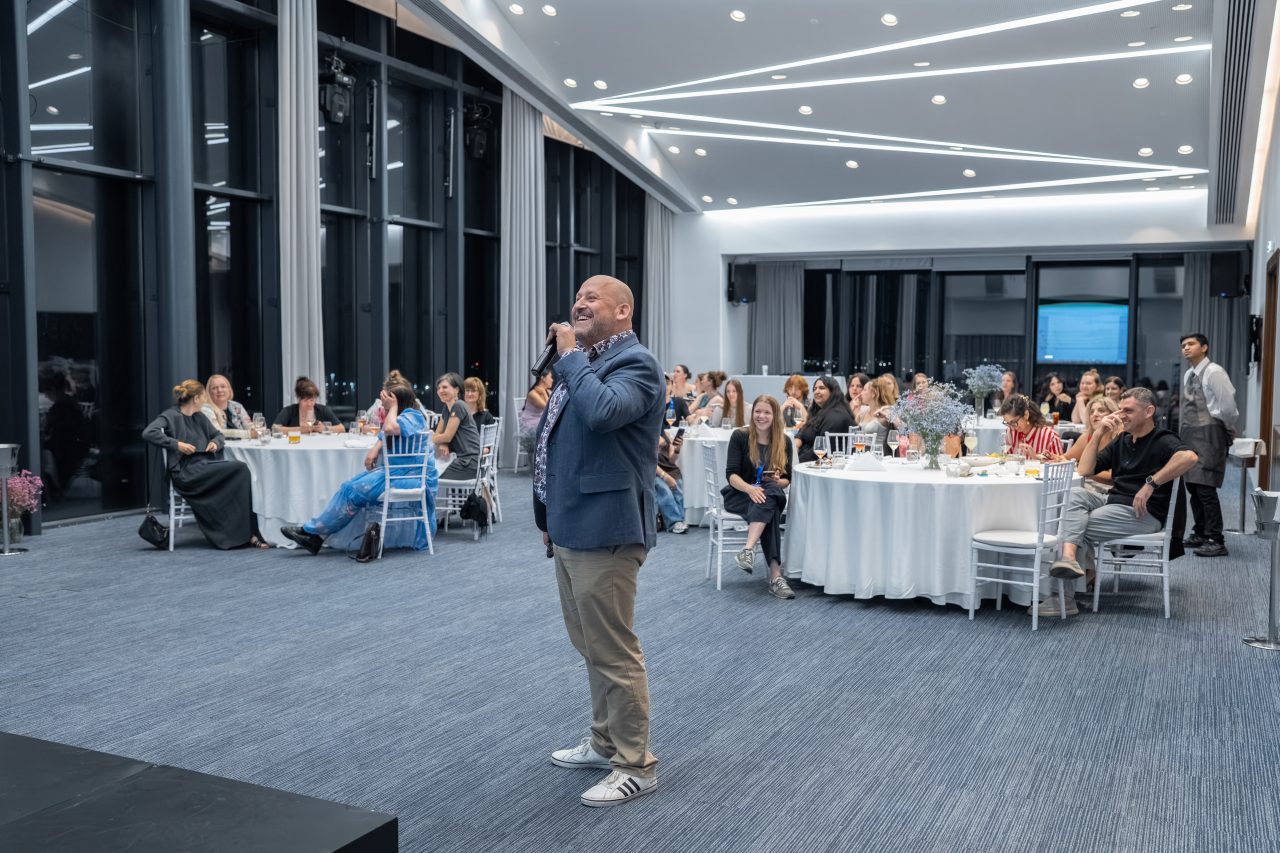
“AI has clearly moved from being a future trend to an everyday reality,” said Carmine Rodi, facilitator of CIOST. He recalled that just three years ago, during CIOST in Tallinn, participants were discussing how AI might affect communication in the future. Today, many communication professionals use AI daily and across multiple platforms.
“The conversation is no longer about whether to use AI, but how to use it critically, ethically and responsibly. Participants discussed everything from prompting and content creation to privacy, data protection and the risks of over-reliance on automated tools,” Rodi explained.
At the same time, participants agreed that technology cannot replace trust, relationships and human creativity.
“AI can help with efficiency and heavy lifting, but effective communication still depends on understanding people, listening to them and creating messages that feel authentic rather than artificial,”
He also noted a growing scepticism among some young people towards AI-generated content. “Many can quickly recognise when communication feels artificial or overly optimised. Authenticity and a genuine human voice remain essential for building trust.”
While participants expect AI to take over more routine and repetitive tasks in the coming years, they also raised concerns about its impact on creativity and the increasing volume of generic content being produced online.
The discussions also highlighted the importance of making informed choices about AI tools. Beyond functionality and cost, communication professionals are increasingly considering privacy, data ownership and ethical design. Participants compared European, American and Chinese AI ecosystems and explored practical measures such as managing AI memory settings, limiting the use of conversations for model training and ensuring GDPR compliance when handling sensitive information.
Rodi pointed to Claude, developed by Anthropic, as an example of a platform designed with a different approach to user engagement. “Claude sometimes actively discourages excessive use. I experienced it myself when it suggested that I stop working and go to bed,” he recalled. When he asked whether this was intentional, the chatbot confirmed that it reflected Anthropic’s design philosophy of encouraging responsible use rather than maximising engagement.
AI is only as good as the instructions it receives
In his session on AI, tools and collaboration practices, George Pratsos, an AI trainer and digital communication expert, emphasised that effective use of AI depends less on the technology itself and more on the quality of human input. AI should not be treated as a source of ready-made answers. Instead, communication professionals need to clearly define the purpose, audience, context, format and expected outcome of a task.
Pratsos stressed that AI does not understand organisational priorities, local realities or audience needs unless these are explicitly provided. Communication professionals therefore remain responsible for selecting reliable source material, verifying information and ensuring that outputs are accurate and fit for purpose.
To structure interactions with AI, he recommended the CRAFT framework (Context, Role, Action, Format and Target Audience). The approach helps users provide clearer instructions and produce more relevant and consistent results. The key takeaway was that AI works best when guided by informed human judgement rather than treated as an autonomous solution.
Authentic communication starts with participation
Another strong theme throughout the training was the value of involving people directly in communication activities.
Rodi highlighted that collaboration with young people, youth organisations, partners and other target groups consistently produces stronger results.
“Whether through ambassadors, influencers, alumni networks or local partnerships, communication becomes more authentic, reaches wider audiences and creates stronger engagement when people are involved as active contributors rather than passive recipients. We also saw inspiring examples of beneficiaries creating content and campaigns themselves, which demonstrated the value of trusting young people as communicators,” he said.
-
Participants emphasised that personal stories and first-hand experiences often resonate more strongly than institutional messages. Rather than trying to imitate youth culture, organisations should create opportunities for young people to communicate in their own voice.
Understanding your audience matters more than ever
A recurring message was that effective communication begins with understanding the people you want to reach.
Participants stressed the need to keep up with changing trends, understand where audiences spend their time and adapt both messages and formats accordingly. Reaching young people effectively requires an understanding of their everyday realities, motivations and expectations.
Special attention should be paid to ensuring that opportunities reach young people with fewer opportunities or specific support needs, including those from minority backgrounds and those facing social, educational or health-related barriers.
As communication channels become increasingly fragmented, participants encouraged organisations to diversify their approaches. Alongside social media, formats such as podcasts, audio content, events and targeted advertising were highlighted as effective ways of reaching specific audiences.
Communication professionals need more than technical skills

Participants described communication as an increasingly demanding profession that requires a broad combination of skills. Alongside communication, presentation and facilitation skills, they highlighted the importance of patience, flexibility, resilience, self-motivation and strong organisational abilities.
Creativity and analytical thinking were seen as equally important. Communication professionals must not only create engaging content but also evaluate its effectiveness and adapt their approach based on evidence and audience feedback.
Looking ahead, participants identified several areas for further development, including AI, social media, analytics, audience research, video production, networking, inclusiveness, team management and workflow organisation. Managing workloads, prioritising tasks and maintaining personal wellbeing were also recognised as important skills in a fast-changing communication environment.
Communication professionals are unlikely to spend their days relaxing by the pool while AI does the work for them. Instead, their role is evolving and becoming more strategic than ever. As technology takes on more operational tasks, greater emphasis will be placed on judgement, creativity, audience insight and ethical decision-making. In a communication landscape increasingly shaped by algorithms, authenticity, empathy and meaningful human interaction may prove to be among the most valuable assets of all.