



Young People Unfamiliar with the EU Youth Programmes amp up the work at the Estonian National Agency
Authors: Aleksandra Mangus
Year of production: 2026
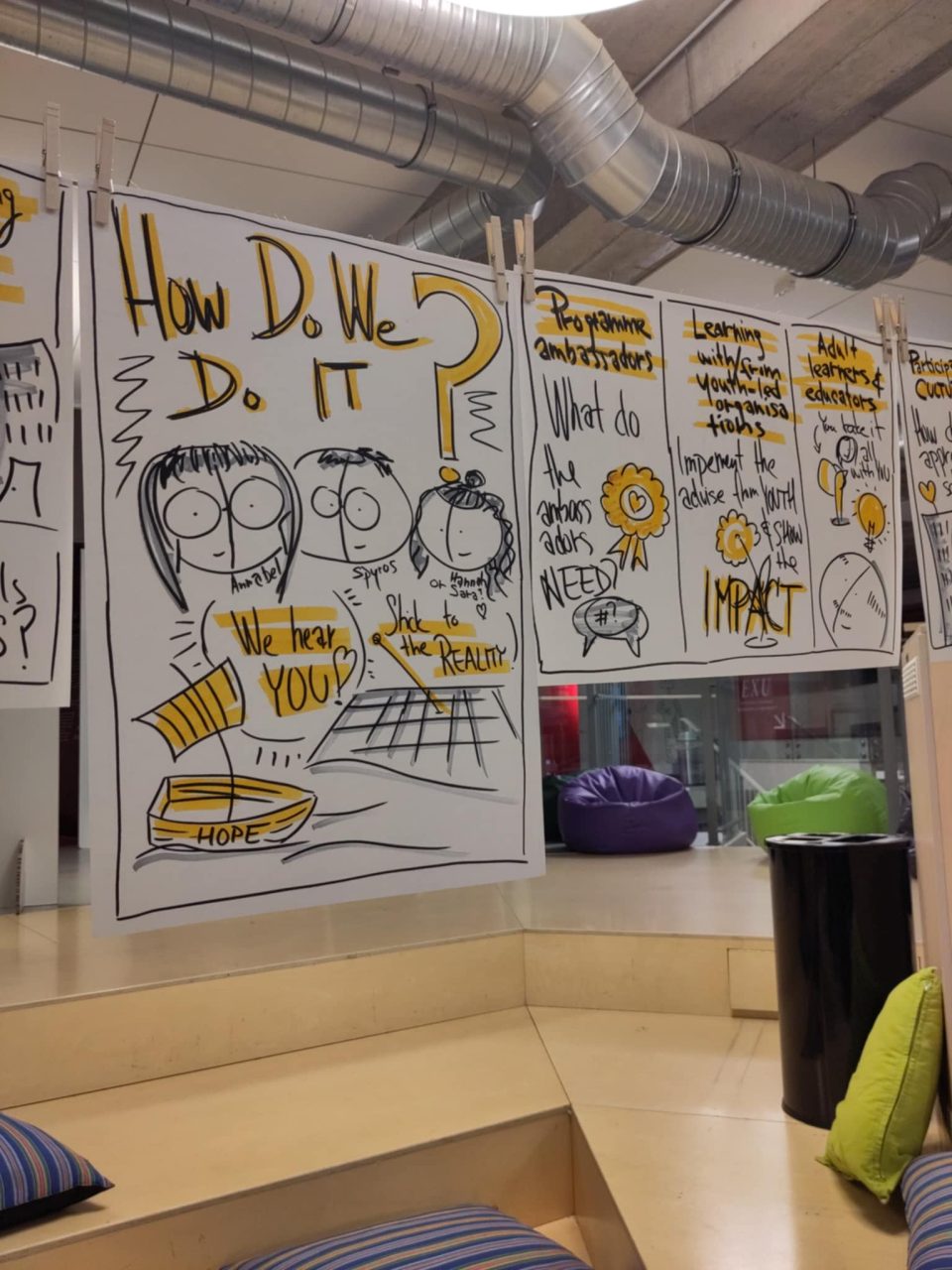
Young people at the meeting about National Agency work, EE NA
“I really like that this kind of thing is happening, that the opinions of the young people themselves are taken into account.”
On a grey March weekend in Tallinn, 19 teenagers arrived from six Estonian counties to spend two days at the Estonian National Agency of Erasmus+ and European Solidarity Corps—an organisation they knew very little about that was eager to know a lot about them.
In fact, the main selection rule for the participants was to have no previous experience with EU Programmes whatsoever.
For the Estonian National Agency, that was exactly the point.
Why ask first-timers?
Like many National Agencies, Estonia had long gathered feedback from those already inside the system: project organisers, youth workers, and repeat participants.
But they knew far less about those who had never even taken the first step of sending an application.
-
If Erasmus+ and the European Solidarity Corps are meant to affect all young people, then those who never take part also have the right to be heard.
At the same time, the broader European conversation on youth involvement was shifting. The 2022 mapping of direct youth involvement in NAs had already highlighted two big tensions:
- Many agencies felt that they should involve young people directly.
- They were unsure how to do so meaningfully with limited time, resources, and experience.
Later work under the New Power in Youth partnership sharpened the message:
-
the real question is no longer whether to involve young people in NA decision-making, but how and when.
The Estonian National Agency had already attempted one ‘big’ answer. A few years earlier, they set up a permanent Youth Advisory Board. Ambition was high: young people would comment directly on programme guides, planning documents, and annual priorities. In practice, the format proved hard to sustain. The mandate wasn’t crystal clear, the schedule was tight, and it was difficult to keep the busy young people engaged over the long term.
So, when the team started planning a new involvement step, they deliberately chose something more focused and modest: a one-off consultative meeting with those engaging with the EU Youth Programmes for the first time.
The goal wasn’t to create another structure.
-
It was to listen deeply to a group that is discussed by NAs constantly but rarely met: young people who could use Erasmus+ and ESC, yet never did.
Another goal was to understand what keeps them away and what they would need and want from such programmes.
Designing the weekend: small step, serious intent
Crucially, this wasn’t a side project squeezed in ‘if there is time’. Youth involvement is part of the Estonian NA’s strategic work, backed by management and linked to the mission of the SALTO Participation & Information Resource Centre, hosted by the Estonian NA.
Youth Projects Coordinator Karin Öövel was put in charge of this youth involvement project and took up the responsibility of designing the weekend.
All this meant that the consultative meeting had:
- a dedicated coordinator;
- an allocated budget and prep time;
- a clear part in the NA’s wider strategy.
This aligned with what earlier mapping and guidance identified as the preconditions for meaningful involvement: a clear purpose, realistic ambitions, an appropriate time frame, and staff with the skills to motivate and empower young people.
The target group was precise. Participants must:
- be 14–18 years old;
- be from different parts of Estonia;
- have no prior experience in Erasmus+ or ESC activities.
This last part proved to be the most challenging, and so, to reach beyond the usual circles, the team:
- stepped out of standard NA communication channels;
- disseminated information via social media;
- filtered out applicants who had already attended NA events to keep the perspective fresh.
-
Karin: We were hopeful to gather a big enough group, with no previous connection to the Agency. We even selected the group in a way that many were left out because they had, for example, already participated in our own activities many times. We wanted to have a very clean sheet and view on our programmes because a person who has already taken part, let’s say, in a training course on the programmes, even though they haven’t applied, has a much better understanding and structure in their head compared to those who haven’t taken part at all.
The National Agency also made several access and inclusion choices:
- All travel and participation costs were covered.
- The schedule was built around a weekend so that school and work would be less of a barrier.
- The facilitator could work in both Estonian and Russian (the two most spoken languages in Estonia), easing potential language barriers.
Inside the room: From everyday stress to European programmes
The two-day programme was designed together with an external facilitator, following very simple logic: start from their lives, not from our programmes. First, learn about young people’s reality and their free time (and lack thereof) and stress factors, and then, slowly, build a bridge from there to Erasmus+ and the ESC.
-
“How much space do you actually have?”
The group started with team-building and open conversations about everyday life, including:
- school pressure;
- homework and exams;
- part-time work, hobbies, family responsibilities;
- how much free time was actually left.
This wasn’t a warm-up gimmick. It mapped the real capacity these young people had to even consider extra opportunities. In line with earlier research, what emerged was not a lack of interest but familiar barriers: busyness and stress.
From there, case studies and puzzle-type exercises were introduced. Instead of asking abstract questions, they offered concrete scenarios, including:
- an after-school activity vs a weekend event;
- a short local project vs a longer exchange;
- joining with friends vs going alone.
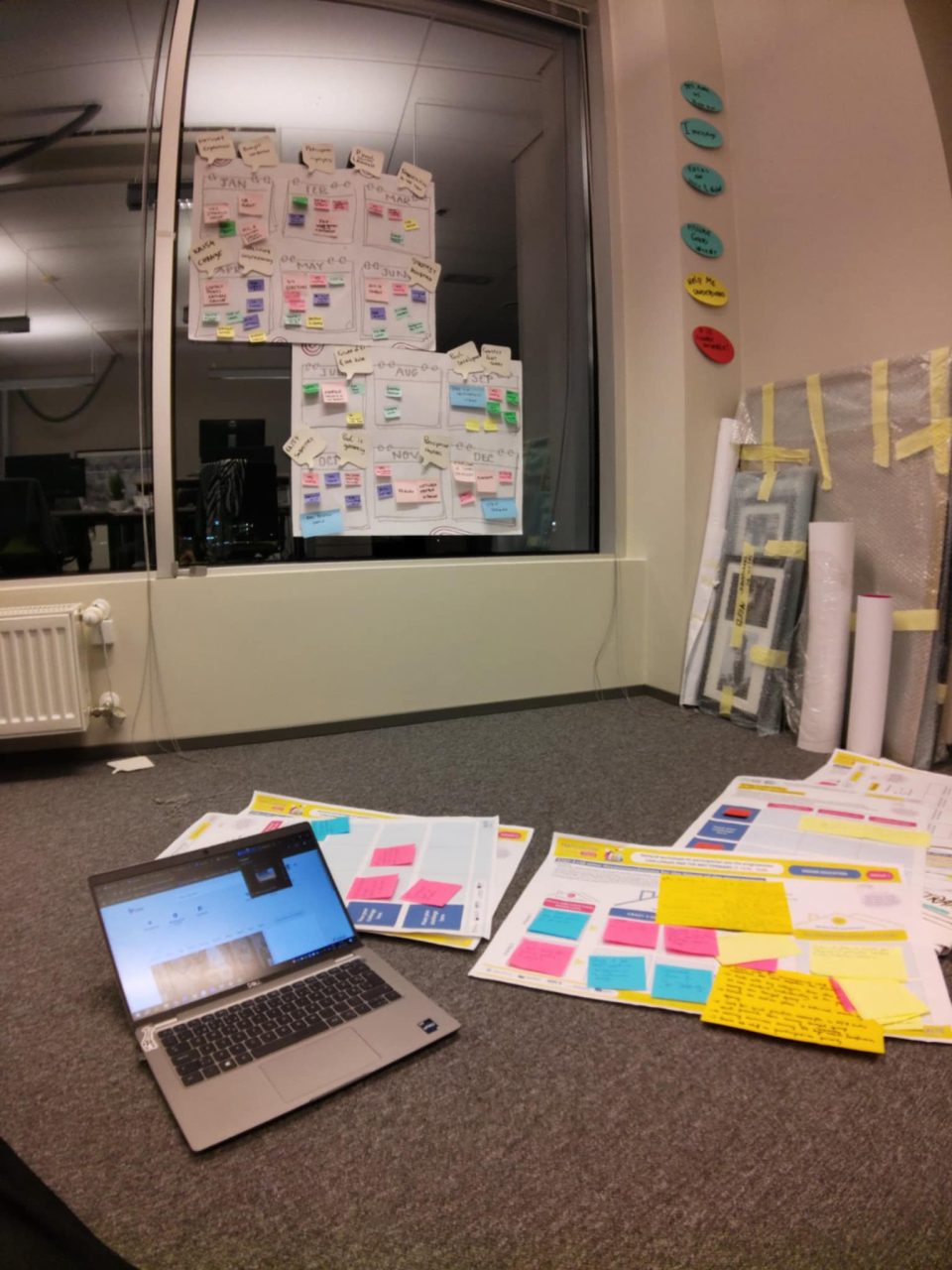
After these activities, participants sorted and ‘built’ their ideal activities using these elements: topic, length, timing, place, support, and who they’d go with.
“What attracts (and what scares) you about EU programmes?”
The second day was almost entirely dedicated to what EU programmes can offer. It started with a bird eye’s-view presentation of the main opportunities, followed by the real-life stories from EuroPeers. They joined the meeting as guests and spoke directly from the experience and perspective of young people who had already taken up these opportunities.
Eventually, the participants mapped things that attract and scare them about joining E+ and ESC projects and gave harsh but honest feedback on the NA’s actual communication materials and social media:
- The language felt too complicated and institutional.
- There was a lot of text, not enough simple explanations or real stories.
- It wasn’t obvious that they, as ‘ordinary’ young people, were welcome.
The outcome of this two-day programme for the participants…
Overall, according to the feedback questionnaire, participants rated the weekend very positively, especially getting the chance to talk about their real struggles and feel genuinely listened to. One unplanned outcome was that the atmosphere sometimes felt like a ‘group therapy’ hub, offering a surprisingly rare chance for teenagers to talk about pressure and stress without judgment, and with adults who simply listened.
The likelihood of their participation in E+ or ESC programmes has risen from 7.8 to 9.1 (on a 10-point scale).
…and what has changed on a greater scale.
So, what did this one weekend actually change inside the institution? The short answer is: a lot.
Some of the most immediate shifts at the NA were in communication and training practice:
- The NA simplified language in youth-facing materials, trimming jargon and focusing more on concrete examples.
- Training formats were adjusted to more explicitly acknowledge stress and fear, to talk openly about ‘first time nerves’, and to emphasise available support.
- In coaching sessions with young people, Karin now often shares that, “in our focus group, young people said stress is the number one thing that stops them from participating,” which is a simple way of normalising their worries and starting a real conversation.
On a broader level, the findings have strengthened the NA’s hand when advocating for more accessible programme design at the European level:
-
shorter and clearer forms, more flexible ways to apply, and more youth-friendly language.
The weekend didn’t create these arguments, but it gave them real, recent evidence from actual first-timers.
The internal report was also shared more widely inside the Estonian Education and Youth Board, helping colleagues from both inside and outside the NA bubble to better understand why “just launching another call” doesn’t automatically bring in new young people.
Honest gaps and lessons
At the same time, the team is very open about what didn’t work as well:
- There was no proper feedback loop for the group.
The young people’s input did influence changes, but the young people themselves were never systematically informed about what happened with their ideas. No follow-up meeting, no summary email linking “you said; we did”. Granted, the changes were implemented gradually over a longer period and across different departments, so there was never a single, fixed moment for giving concrete feedback back to the group. Nevertheless, looking back, both the Project Manager Karin and the Deputy Director Reet see this as a missed opportunity. - One-off format, high motivation.
Ironically, the strongest sign of success was also a weakness: many participants wanted to stay involved, but there was no ready-made longer-term path for them yet. This experience partly pushed the organisation towards developing more structured mechanisms.
System-wide changes
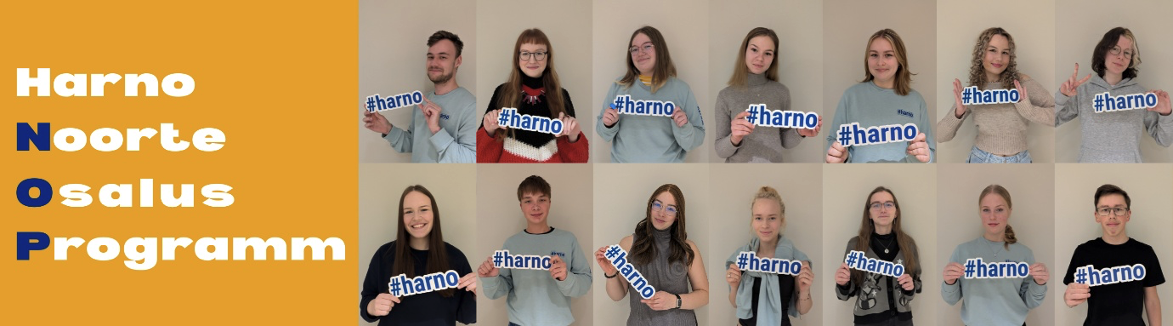
An even bigger opportunity soon came into view when the Estonian Education and Youth Board – Harno, a 400-person public body created in 2020, responsible for everything from state exams to teacher training to youth work development, drafted its first three-year strategy.
The National Agency proposed the idea of a permanent youth participation programme to the top management of Harno, and the decision was made to scale up from NA-only practices to a board-wide youth participation programme:
- Youth participation would be an explicit strategic objective, not a side activity, as this is a nationally important priority embedded in the Estonian Youth Sector Development Plan for 2021–2035, as well as one of Harno’s objectives in the newly formed internal strategy.
- A dedicated coordinator was appointed to support programme development and keep it running on a daily basis. This person was not a programme officer or regular coordinator of NA who would have other tasks to run. They are a dedicated project-based coordinator whose sole responsibility is to keep this programme running.
- Internal mapping identified where young people should have a say and where their initiative and opinions could have a real influence on the education and youth services managed by Harno.
- A nationwide campaign and a public call for participants brought together a new, more diverse group of young people to co-design a new, yearly participation programme across departments, not just in Erasmus+ and the ESC.
The NA is also promoting youth engagement in public institutions nationwide, intending to inspire other state-level institutions to set up their mechanisms to reach out to young people and give them decision-making power in their structures.
What other National Agencies can take from this
Every NA operates in a different legal and political context. Not everyone can immediately launch a big youth advisory board or a full participation programme.
But the Estonian experience points to some practical lessons that can be adapted elsewhere, especially if you’re considering a consultative meeting with young people with no prior programme experience.
If you do just a few things, do these:
- Start with a clear, honest purpose.
Know why you are inviting young people in. Is it to review communication, test new formats, understand barriers, or something else? Don’t promise them influence on decisions that are actually made elsewhere. - Put someone in charge, and resource them.
Youth involvement is real work. Give it to a staff member with time, not as an ‘extra’. Ideally, that person should have youth work experience or be supported by facilitators who do. - Reach beyond your usual suspects.
If the mechanism is about newcomers, build that into your selection criteria and communication. Work with schools, youth centres, and local NGOs, and use platforms where young people actually are. - Design from their reality, not your structure.
Start the meeting by exploring their everyday life, stress and time limits. Only then can you move towards your programmes. Use concrete scenarios, not abstract policy labels. - Make it a win-win.
Alongside gathering input, offer something back: Even if there’s no opportunity to reimburse young people for their work directly, provide them with thorough information on opportunities, a useful workshop, a certificate, or simply a well-facilitated space to reflect and connect. - Document and share internally.
Have someone responsible for capturing the input and turning it into a short, readable summary. Share it widely, not just within the youth unit, but across your organisation, and make sure it gets implemented. - Plan the feedback loop before you start.
Decide how you will tell young people what happened with their ideas, by when, and who will send that message. This one step does more to avoid tokenism than any fancy format.
And a few don’ts:
- Don’t start a permanent youth structure unless you are sure you can sustain it, and the young people you engage have sufficient motivation and time on their hands. A modest but well-run one-off consultation is better than an advisory board that slowly fades away.
- Don’t treat youth involvement as free labour. Cover costs, consider compensation or at least meaningful recognition, and respect that young people are juggling school, work, and private life.
- Don’t wait for the ‘perfectly diverse group’ before starting. Begin with who you can reach, learn from that, and improve your outreach over time.
- Don’t let the learning live only in one project manager’s head. Share the outcomes and discuss them within the organisation. Furthermore, staff change; written lessons and simple internal tools keep the experience alive.
A final thought
If there is one
Youth involvement in National Agencies is not a question of ‘if’ anymore. It is a question of how big a step you are ready to take this year—and how you’ll take it with young people, not just for them.
For Estonia, one small but serious step was inviting 19 complete newcomers into the room and asking them, honestly, “What makes all of this feel distant, stressful, or out of reach?”
For your NA, the next step might look different. But it can start just as simply: with a clear question, an open door, and a genuine willingness to listen, and then to act.
The series of articles on youth involvement in decision-making in National Agencies is a part of activities organised by SALTO Participation & Information Resource Centre and partners in an effort to encourage the right of young people to participation in decisions affecting them and to implement Aim 5 of Youth Participation Strategy “to encourage National Agencies and other actors to involve young people when making decisions about the management and implementation of the programmes, and to take a quality approach to youth participation when doing so”.
We are grateful to the authors, National Agencies and the young people themselves for dedicating time and effort to co-create activities together and to share their experience in doing so, inspiring us, National Agencies and other institutions.
Read more:
-
Read the report on youth involvement in decision-making
participationpool.euAvailable in EN -
Read more about the case of Dutch National Agency
participationpool.euAvailable in EN -
Read more about the Youth Advisory Board of the German National Agency
participationpool.euAvailable in EN -
Read more about the Youth Advisory Board of the German National Agency
participationpool.euAvailable in EN -
Doing inclusion differently: How young people with fewer opportunities shaped the SALTO I&D Forum
participationpool.euAvailable in EN
Authors