







Doing inclusion differently: How young people with fewer opportunities shaped the SALTO I&D Forum
Authors: Mary Drosopoulos
Year of production: 2026
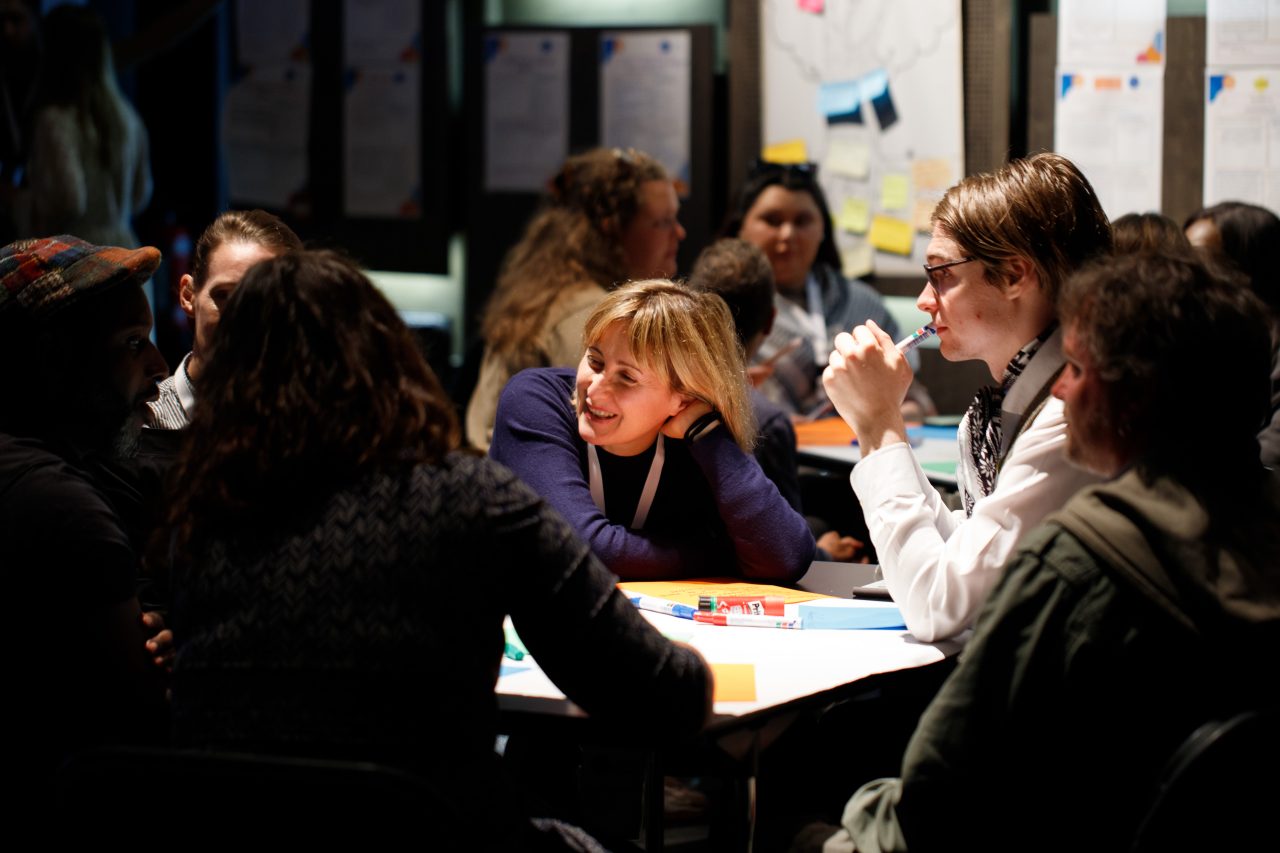
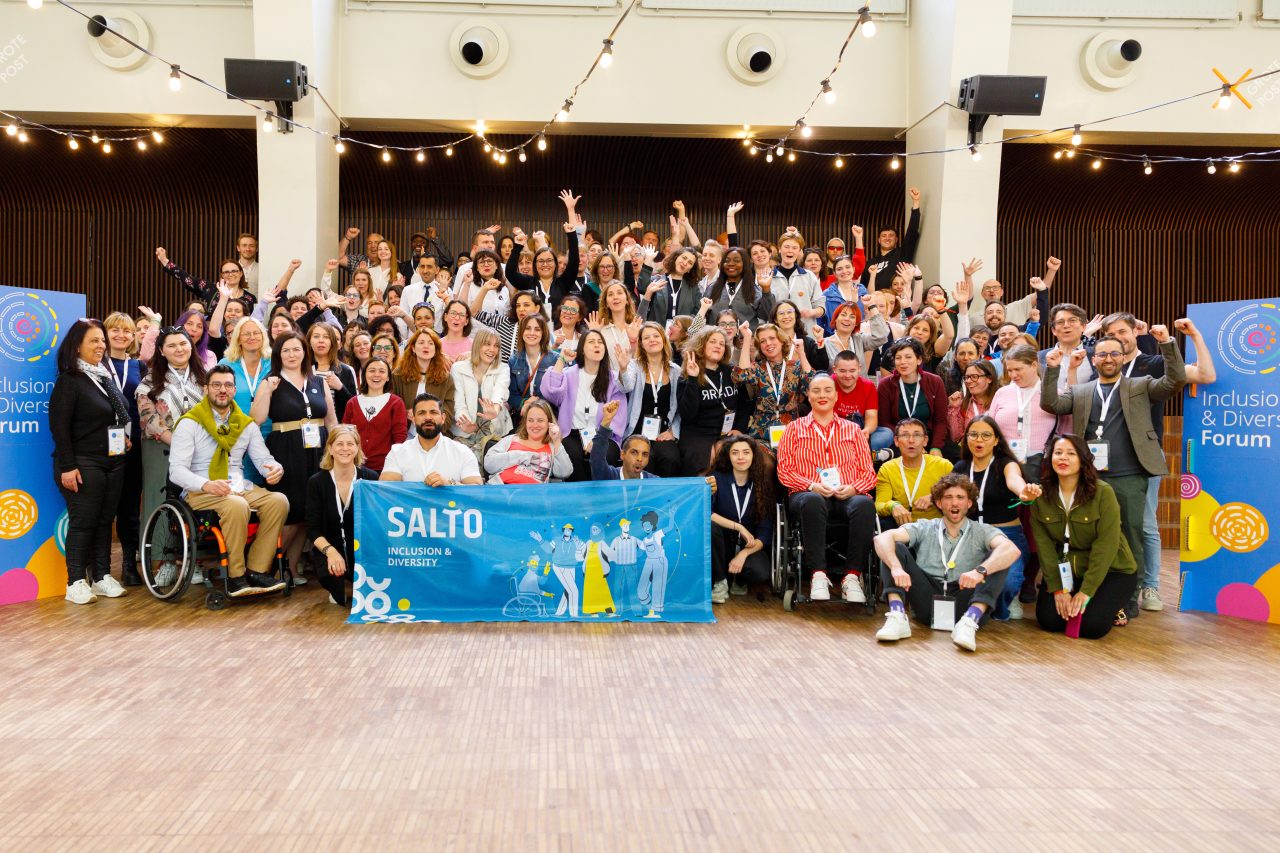
Picture from 2025 ID Forum, SALTO Inclusion & Diversity Youth
Across the EU Youth Programmes, the ambition to involve young people in decision-making is widely shared, but the practice often falls short of the rhetoric. For young people with fewer opportunities, participation is still too frequently limited to consultation, feedback rounds, or symbolic representation.
The Inclusion & Diversity Forum preparation process offered an opportunity to test something more substantial:
-
inviting young people with lived experience of exclusion into the core organisational process, allowing their perspectives to shape the design, accessibility, and purpose of a European-level event.
The experience provides valuable learning for National Agencies (NAs) that want to move from intention to implementation.
Early involvement as a foundation for meaningful influence
SALTO I&D’s Advisory Group was brought in before key decisions were locked in. This early timing enabled a more equal conversation about what the Forum should achieve and how it should be structured.
Members quickly brought essential insights to the table. One noted, “I loved the diversity of the group.”
While simple, this comment highlights a core principle in SALTO’s approach to participatory work:
-
diversity is not only a representation issue, but a resource for better decision-making.
Varied experiences allowed the group to notice barriers that more experienced or institutionally embedded actors might overlook.
Because this involvement happened early, the group’s reflections shaped perspectives on accessibility, outreach, methodology, safety, and communication—not as ‘late fixes’, but as integral parts of the event design.
Where young people’s input shifted the direction of the Forum
- Rethinking outreach and who the Forum is for
Advisory Group members questioned whether the standard communication channels would reach those furthest from opportunities. Their observations pushed the team to re-examine how calls and descriptions were framed, and how far beyond familiar networks they travelled.
This recalibration contributed to a significant broadening of the applicant pool—nearly 800 applications, including people and organisations that SALTO I&D had not previously reached at this scale. While numbers are not the real goal, they signal a shift in those for whom the Forum had an impact. - Strengthening accessibility through lived experience
Accessibility is often understood in narrow, mostly physical terms. Group members challenged this by highlighting digital, cognitive, and social barriers. One participant made the point very clearly, stating, “Digital skills and devices should not be taken for granted, especially in a shared space.” This observation led the team to rethink not just technical arrangements but the assumptions behind them:
-
What does it mean to expect everyone to navigate online platforms confidently? How does a person’s environment or equipment shape their ability to participate equally?
These reflections translated into concrete adjustments: clearer instructions, additional support mechanisms, and a more intentional approach to ensuring that participation—both online and on site—would be realistic for more people.
3. Rethinking facilitation and participant experience
Feedback on methodologies encouraged the team to adjust session formats and planning. The group questioned whether everyone would feel safe or confident to contribute in large, fast-paced discussions. Their input led to the adoption of methods better suited to different communication styles, reflecting SALTO’s ongoing commitment to inclusive learning environments.
These changes did not transform the event overnight, but they reflect a deeper principle:
-
participation is not only about being present but also about being able to contribute meaningfully.
4. Embedding participation beyond the event itself
In addition to influencing specific aspects of the Forum, the Advisory Group engaged in reflection on the process as a whole. Their feedback fed directly into the final recommendations document, including the suggestion to establish a permanent advisory structure from 2025.
This is particularly important from a SALTO perspective: meaningful participation is not a one-off exercise but a long-term commitment. A sustained advisory structure allows for continuity, capacity-building, and the more equitable distribution of influence over time.
Lessons from the process: What participation requires in practice
The pilot confirmed a truth that organisations across Europe have been grappling with: creating meaningful participation requires time, continuity, and facilitation.
Young people reflected candidly on the challenges:
“I was surprised that I remained committed despite the long breaks between calls and the absence of the possibility to get to know the people in the group.”
“It was more individual; I preferred something more collaborative.”
These statements point to deeper needs: relationship-building, regular contact, and spaces that foster collective ownership. Participation is relational, not only structural.
On the organisational side, capacity constraints were a real factor. An NA member reflected, “The challenge lies in balancing commitment to participation with limited capacity.”
This tension is familiar to NAs: staff workloads are already high, and participatory processes require additional coordination and emotional labour. The lesson is not that participation is too difficult but that it must be planned, resourced, and shared, not added on top of existing responsibilities.
Dos & Don’ts for National Agencies
If you do just a few things, do these:
- Involve young people from the beginning, when there is room to influence direction rather than detail.
- Value lived experience as expertise: it enriches design, highlights hidden barriers, and shifts perspectives.
- Be clear about decision-making processes, including what is open for influence and what is not. Clarity empowers; ambiguity frustrates.
- Budget realistically for participation: compensation, assistants, travel, accessible technology, and facilitation time.
- Build continuity: regular meetings, timely updates, and opportunities to connect help young people stay engaged.
- Document the process—not just the event—to support learning across the network.
- Communicate visibly about how input was used; even partial implementation builds trust.
And a few dont's
- Don’t involve young people only at the final stage; it limits their influence and risks tokenism.
- Don’t assume that online environments are automatically inclusive.
- Don’t rely solely on traditional networks for recruitment; active outreach is essential.
- Don’t ignore the relational dimension; participation does not thrive without connection.
- Don’t make broad promises you cannot meet; transparent limits create safer expectations.
Moving forward: Participation as a culture, not a task
The I&D Forum pilot shows that when young people with fewer opportunities are included meaningfully,
-
the outcomes are richer, the event is more relevant, and the process becomes a learning journey for everyone involved.
At the same time, the experience underscores that participation is not simply “adding young people to the table”. It is a culture shift—one that requires intention, transparency, support, and continuity.
An advisory group member reflected, “I was involved in what I was asked to do, but I feel that my experience was not used fully.”
This reminds us that participation must keep evolving, not as a critique, but as
-
a call for deeper collaboration, clearer roles, and stronger structures.
For SALTO and the wider NA network, this is where the future lies: participation that is embedded, resourced and understood as a long-term practice, shaping not only events but how inclusion and diversity are approached across the EU Youth Programmes.
The series of articles on youth involvement in decision-making in National Agencies is a part of activities organised by SALTO Participation & Information Resource Centre and partners in an effort to encourage the right of young people to participation in decisions affecting them and to implement Aim 5 of Youth Participation Strategy “to encourage National Agencies and other actors to involve young people when making decisions about the management and implementation of the programmes, and to take a quality approach to youth participation when doing so”.
We are grateful to the authors, National Agencies and the young people themselves for dedicating time and effort to co-create activities together and to share their experience in doing so, inspiring us, National Agencies and other institutions.
Got curious? Check out some other materials on this topic
-
Read the report on youth involvement in decision-making
participationpool.euAvailable in EN -
Read more about the case of Dutch National Agency
participationpool.euAvailable in EN -
Read more about the Youth Advisory Board of the German National Agency
participationpool.euAvailable in EN -
Young People Unfamiliar with the EU Youth Programmes amp up the work at the Estonian National Agency
participationpool.euAvailable in EN -
The journey of youth participation in the Latvian National Agency
participationpool.euAvailable in EN
Authors