






The journey of youth participation in the Latvian National Agency
Authors: Linda Ulāne
Year of production: 2026
Young people in preparation of the events, LV NA
I was shocked to realise that the people of the National Agency are not bosses; turns out, we are a team!
Making decisions to invest the necessary time, energy, and resources to engage young people in educational events is not always easy. Even more challenging is the decision to trust young people themselves with organisational responsibilities. Here, we share insights into two entry points: inspiring and challenging journeys made possible by the Latvian Agency for International Programmes, and highlighting the power of collaborative teamwork with the target group.
Hop on The Train of Europe, operated by youth
The quote above reflects the enthusiasm and perspective of one of the young organisers involved in the ‘Hop on The Train of Europe’ event held in May 2025. This event, now in its second year, was organised by the Latvian Agency for International Programmes for Youth. The idea was born during a brainstorming session at the Agency when trying to find a way to respond to the slogan of that year’s European Youth Week, ‘Voice your vision’. The Latvian National Agency has never aimed to create events just for the sake of having an event. Instead, i
-
strives to reach out to youngsters and include their perspective in National Agency’s activities.
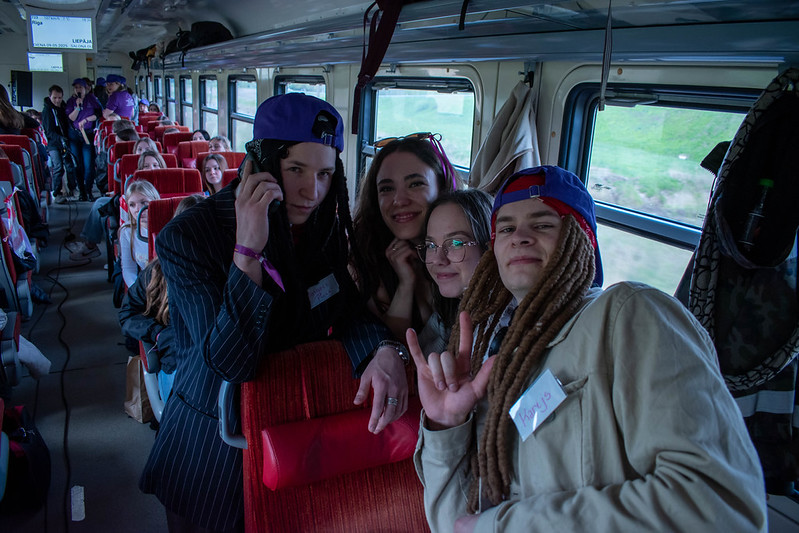
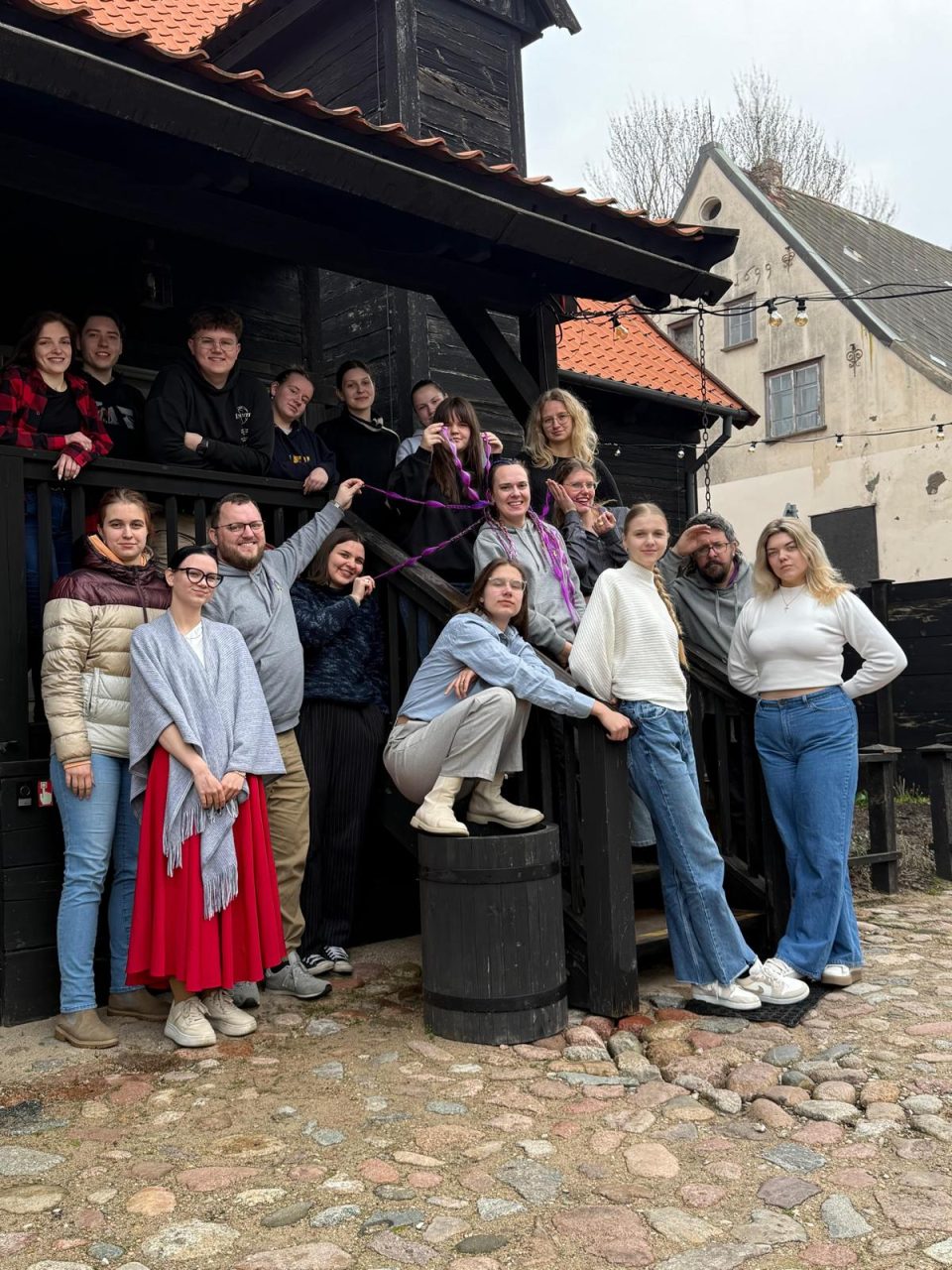
The event involves a group of 20 young people, supported by NFI trainers and National Agency representatives, organising a round trip by train from Riga to another city. The journey is filled with educational activities focused on youth opportunities. The process begins with the National Agency issuing an open call inviting young people aged 16 to 30 to apply as organisers for the event. Those who are selected participate in a three-day training, during which they collaborate with NFI trainers to design the event’s programme for the train ride.
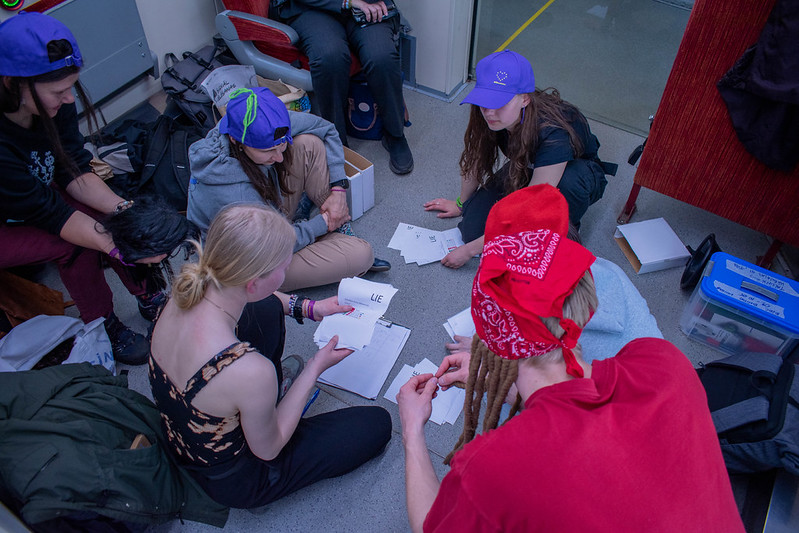
Throughout this training, participants discuss European values, the European Youth Goals, available opportunities within European youth programmes, and other relevant topics that can engage and benefit their peers. The fresh team of organisers incorporate a variety of interactive and impactful methods such as quizzes, workshops, inspirational stories, and simulations of the election process to make the event both educational and entertaining.
The main highlight of the experience is the journey itself—the trip from Riga to Liepaja (in 2025), where 60 young people take part in workshops and activities during the three-hour train ride. The educational momentum continues into the following day. All these efforts are thoughtfully planned and facilitated by young organisers themselves, with support from NA representatives and NFI trainers.
Join the 24-hour project creation marathon, and its route, established by youth
Ten years ago, NFI trainers from the Latvian National Agency noticed that during project writing workshops, young participants were most active and alert around 22:00 and later. They decided that this should not be ignored. On the contrary, there should be an event that offers a schedule that fits the needs and working styles of youth. They created a hackathon-type event where youngsters could develop their project ideas and get immediate consultations and support in project writing, so these ideas can be submitted for the call for funding of Erasmus+ and ESC programmes. This is how the Project Night was born.
Over the years, the event has evolved into one of the grandest and most celebrated annual youth festivals, serving as a platform for project writing and learning. Furthermore, the focus has shifted towards a more informative approach, enabling young people to develop a better understanding of how to create quality projects and providing them with mental space during the intense writing process. Moreover, there are more and more youngsters who want to share their experiences with others; a few years ago, EuroPeers used the Project Night as a platform for bringing in more of their own, that is, youth perspective, experiences, and ideas. They created a small, informative trail for their peers. Since the event took place at night, NFI trainers couldn’t oversee it fully, so the young people took full responsibility for planning and facilitating the activity. During this time, the train event, described above, achieved great success. And this encouraged the Latvian National Agency to be braver when following their own principle:
-
everything about youth must be done with youth.
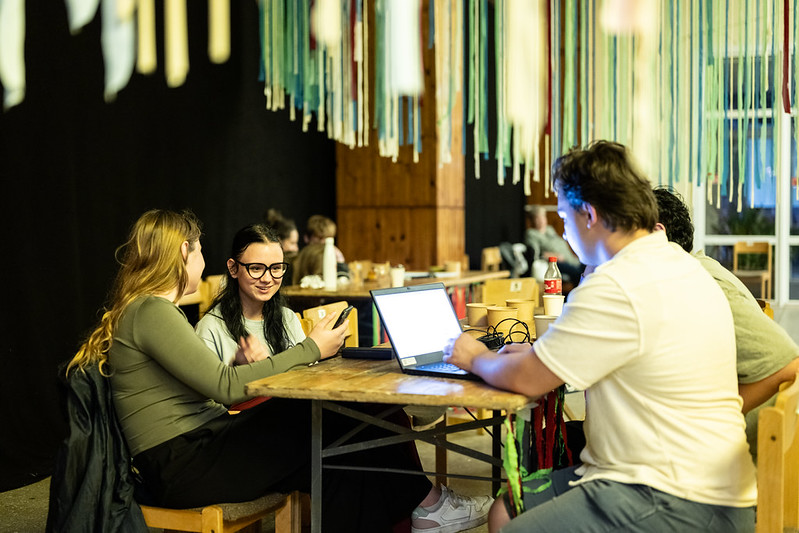
For the upcoming Project Night, the National Agency decided to follow the success of the ‘Hop on The Train of Europe’ initiative. The first step was to issue a call for young people to apply for the core organising team – over 50 applicants responded! The selected 14 individuals participated in preparatory training several months prior to the Project Night, during which they were introduced to the event’s aims and objectives. Based on last year’s event, the youngsters developed their own concepts, activity ideas, and scenography for the event. Then they presented their programme not only to the National Agency but also to the Vice-Mayor of Liepaja, the Latvian Capital of Youth 2025, where the Project Night took place.
The ongoing work involved various work groups supported by NA representatives and NFI trainers for several months leading up to the event. During this period, youngsters came up with various decisions that later on were discussed and agreed upon or improved together with the National Agency. Some of the examples include: organising silent discos, creating spaces for sharing individual stories, finding sponsors for decorations, working side by side with NA trainers, and deciding how to set up the venue and take care of it. Notably, when National Agency representatives were invited to speak about Project Night on national television, they attended as a team of one NA representative and two youngsters, therefore emphasising the importance of youth involvement.
Bumps along the ride
Of course, if youth participation were as easy as it might seem after reading these examples, there would not be a need for a series of inspirational articles or maybe even for the Youth Participation Strategy. It is a challenging and complex process that requires a decent amount of resources, not only good intentions and enthusiasm. The representatives of NA admit that finances are only one of the requirements to ensure quality participation.
-
Readiness to back down from their beliefs about what is ‘better and more correct’ is also required.
They had to learn to coexist and balance the goals and expected indicators with the capabilities of the youth organiser group, the content they produced, and the way they ran the event.
Nevertheless, this symbiosis improves year by year and brings more satisfaction. The NFI trainers and young people themselves shared a common need for more preparation and planning time. The youngsters expressed that during the preparation training, they had to quickly absorb a substantial amount of new information, including European values, the opportunities offered by Erasmus+ and ESC programmes, and the concept of non-formal educational approaches that are participatory and learner-centred, which was too intensive for most of them. Another challenge was that, given the complexity of the Project Night event, NFI trainers provided continuous support throughout the preparation period. This involved significant time dedicated to group and individual guidance, as well as ongoing communication with the National Agency, which ultimately required more hours than initially anticipated. Of course, time is money, and financial investment is an important consideration. However, if such a small country can allocate funds to promote youth involvement at this level, it demonstrates that it is indeed possible. Furthermore, none of the interviewed young people mentioned a lack of money as a challenge. Instead, they emphasised the need for clear information about available funding from the beginning. Having transparent financial details early on would enable more realistic planning and allow more efficient time management among all stakeholders—youth, NFI trainers, and the National Agency.
Below, you'll find tips from young people, NFI trainers, and NA representatives to help create a smoother process:
- Announce the call for youth organisers in advance and establish clear selection criteria, such as their availability to participate in both the preparation period and the main event.
- If you plan to involve less experienced youth, provide a list of the types of work expected, along with the approximate time they will need to dedicate.
- It is always preferable to select youth with diverse experiences, as those with more experience can mentor their peers or take the lead on certain tasks, and those with no or little experience can help make the event more valuable for the particular target group.
- Ensure that all participants genuinely want to be involved. Avoid using this experience as an obligatory activity for certain youth groups, such as EuroPeers, as it may lead to unnecessary tension within the group and present decision-making not as a right, but as an obligation and therefore possibly as a chore.
- Include NFI trainers as a part of the support for the organisers’ group.
- Have a clear, available budget announced before the young people start to plan the activities.
- Allow space for mistakes and turn them into learning opportunities.
- Plan enough working hours for NFI trainers/support persons.
- Let the youngsters fully plan the activities, while the Agency can ‘polish’ them.
- Establish clear roles and well-defined ways to communicate with each other. For example, designate specific individuals responsible for communicating with the NA and sharing information with the team to prevent duplication or loss of important details.
- If there is no option for remuneration for the young people for their time and input, prepare other ways to acknowledge their effort and work, such as acknowledgements including thoughtful gifts.
- Make sure there is public recognition for young people’s contribution, for example, invite them to join if there are meetings with the press or publish acknowledgements on the official social media accounts. If there is an official website for the event, create an organisers’ section.
- Trust youngsters. They are full of ideas and ready to realise them. Moreover, they truly appreciate the trust.
Where this path can lead
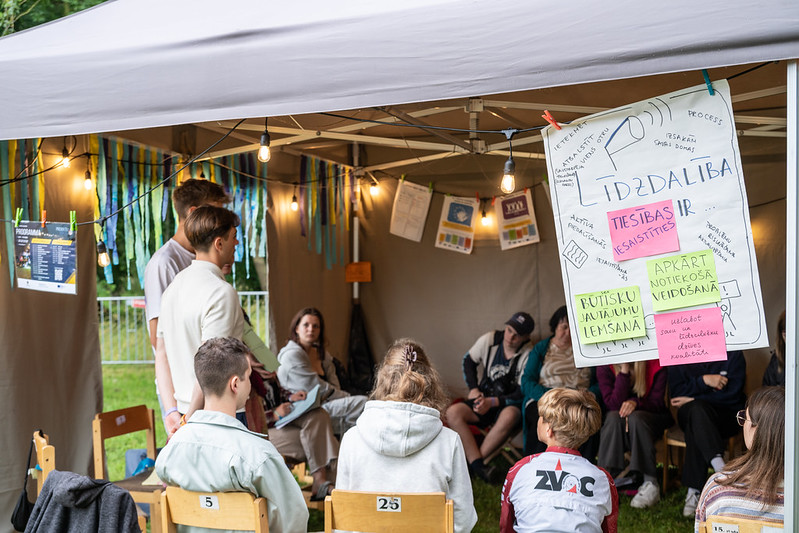
This is undoubtedly a significant learning opportunity for young people. The young people interviewed value the knowledge gained about opportunities for youth, about the National Agency, non-formal education, and participation itself. They developed new skills in cooperation, communication, decision-making, event management, planning, strategising, public relations, logistics, and promotion. It’s more than just an addition to their CVs; some have received invitations to become support persons, mentors, or coaches in Solidarity projects. Participants from across the country built new networks and practised solidarity among a rather diverse group of youth. The impact on youth organisers is profound; giving them such responsibility can result in so much more.
-
The events offered by the NA are becoming more youthful and target-group-friendly.
The peer-to-peer approach proves effective; the NA has enough proof of that now. Young people ‘hear’ their peers better and are inspired more strongly. Meanwhile, NFI trainers are acknowledging the greater impact on participants, especially when encouraging youth to pursue new opportunities. Additionally, these events provide valuable insights from young people on what influences them and how future activities could be built, even when youth cannot serve as organisers. Activities are more based on the interests and needs of young people, rather than adults’ understanding of their needs.
-
These events also serve as a learning platform for the National Agency.
Young people’s ambitions and energy, combined with the Agency’s resources, can generate meaningful and lasting results from a single event. It was also noted that working with youth in these settings offers a reality check about youth work, which doesn’t fit into traditional nine-to-five frameworks. This builds more professional empathy towards youth workers and the current situation in the field.
Furthermore, youth feedback indicates increased trust in official/governmental institutions—an essential element in today’s populist climate.
Youngsters admit that during planning and organising the events, they feel heard and trusted and have the chance to engage in conversations and decision-making as equal partners.
This might reduce the usual gap between ‘us’ and ‘them’, often not being aware of who ‘they’ are. During this intense work, youngsters get to know the NA not only as an organisation with resources and regulations, but as people who have similar values and wish to improve the opportunities for youth. Most importantly, this is an opportunity for the National Agency to lead by example, demonstrating high-quality participation in action and inspiring youth organisations and youth themselves to do the same.
This is an opportunity for the NA to be true practitioners of our own values and to follow the same path of learning that we expect young people to follow.
Acknowledgements for contributions to this article:
Youth organisers of ‘Hop on the Train of Europe’: Renate Kalnina, Haralds Kriscuns
Youth organisers of the Project Night: Anna Galbalina, Rihards Krievans
The trainers of the Latvian NA trainers’ pool: Sigita Braze Skujina, Santa Krastina, Marija Driksna, Stanislavs Babins
Latvian NA representatives:
- Project Coordinator of the International Cooperation and Support Division of the Youth Policy Department, Līva Elizabete Liepiņa
- Senior Project Manager of the International Cooperation and Support Division of the Youth Policy Department, Arita Zvejniece
- Director of the Latvian NA, Līga Lejiņa
The series of articles on youth involvement in decision-making in National Agencies is a part of activities organised by SALTO Participation & Information Resource Centre and partners in an effort to encourage the right of young people to participation in decisions affecting them and to implement Aim 5 of Youth Participation Strategy “to encourage National Agencies and other actors to involve young people when making decisions about the management and implementation of the programmes, and to take a quality approach to youth participation when doing so”.
We are grateful to the authors, National Agencies and the young people themselves for dedicating time and effort to co-create activities together and to share their experience in doing so, inspiring us, National Agencies and other institutions.
“Got curious about youth involvement? Read more here
-
Read the report on youth involvement in decision-making
participationpool.euAvailable in EN -
Read more about the case of Dutch National Agency
participationpool.euAvailable in EN -
Read more about the Youth Advisory Board of the German National Agency
participationpool.euAvailable in EN -
Young People Unfamiliar with the EU Youth Programmes amp up the work at the Estonian National Agency
participationpool.euAvailable in EN -
Doing inclusion differently: How young people with fewer opportunities shaped the SALTO I&D Forum
participationpool.euAvailable in EN
Authors