











Young People Want More Than a Seat at the Table: Key Takeaways from You(th)4Participation 2026
2 June 2026
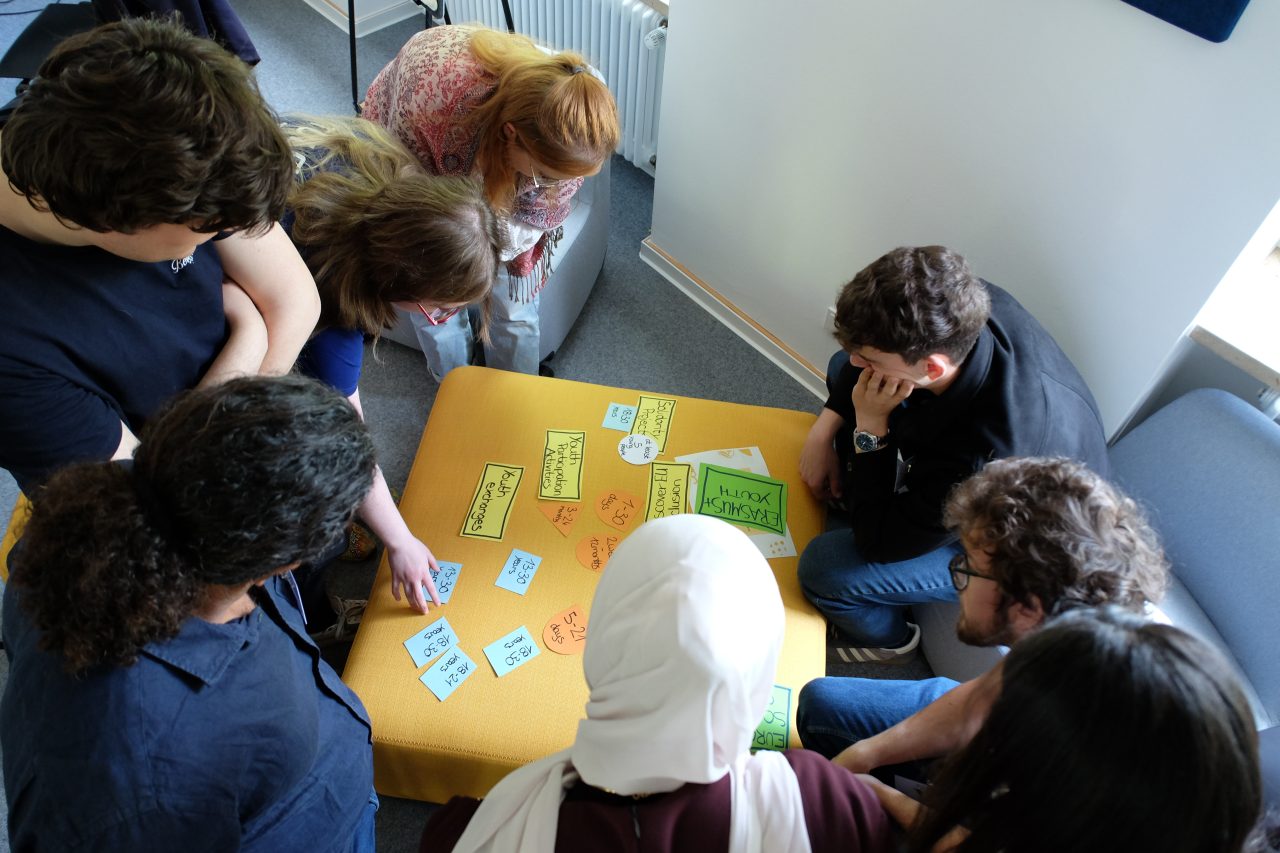
Discussion in a group. Photo: Max Wegen (JUGEND für Europa)
From 15 to 17 May 2026, around 40 young people from 12 countries gathered in Bonn, Germany, for the You(th)4Participation Meeting. Over three days, young people involved in the work of National Agencies and SALTO Resource Centres developed practical ideas for strengthening youth involvement in institutional decision-making across Europe.
Can institutions truly share power with young people? What makes participation meaningful rather than symbolic? And what can organisations learn from the experiences shared in Bonn? We spoke to the organisers and participants to explore these questions and gather their key takeaways to offer value for any organisation looking to raise the bar in its participation work.
Organised by JUGEND für Europa (the German National Agency of Erasmus+ Youth, Erasmus+ Sport and the European Solidarity Corps) together with SALTO Participation & Information Resource Centre (SALTO PI) and in cooperation with New Power in Youth (NPiY), the event focused on one central question: what does meaningful youth participation actually look like in practice? Over three days, young people active in Youth Advisory Boards, EuroPeers networks, steering groups and other participation structures exchanged experiences, challenged institutions, and worked on practical ideas for improving youth involvement in decision-making across Europe.
Participation starts before decisions are made
One of the strongest messages from the meeting was that meaningful participation cannot begin after decisions have already been made. The event itself tried to reflect this principle. A youth-led preparation team, including EuroPeers and members of youth advisory structures, shaped the planning of the event and the programme from the start.
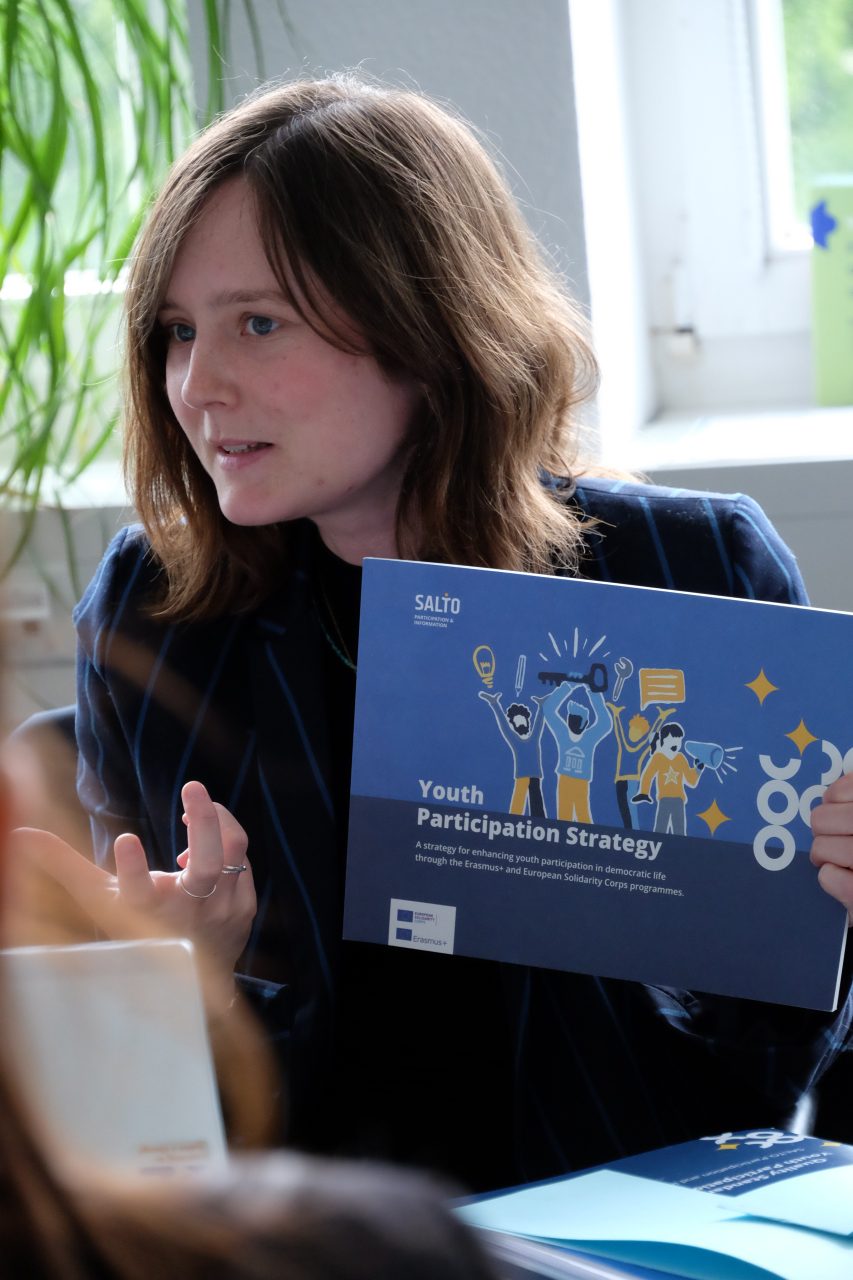
The meeting built on the goals of the Youth Participation Strategy, particularly Aim 5, which focuses on strengthening young people’s roles in governance and decision-making within Erasmus+ and the European Solidarity Corps.
Participants came from different realities and participation structures. Some represented well-established youth boards connected to National Agencies, while others described situations where opportunities for involvement remain limited or unclear.
“In my view, young people do not feel included when decisions affecting programmes for their generation are made without consulting them. It is disappointing when their views are not taken seriously, even though they could offer useful suggestions for improving EU mobility programmes such as Erasmus+, the European Solidarity Corps or youth exchanges, as they have often only recently experienced these programmes themselves,”
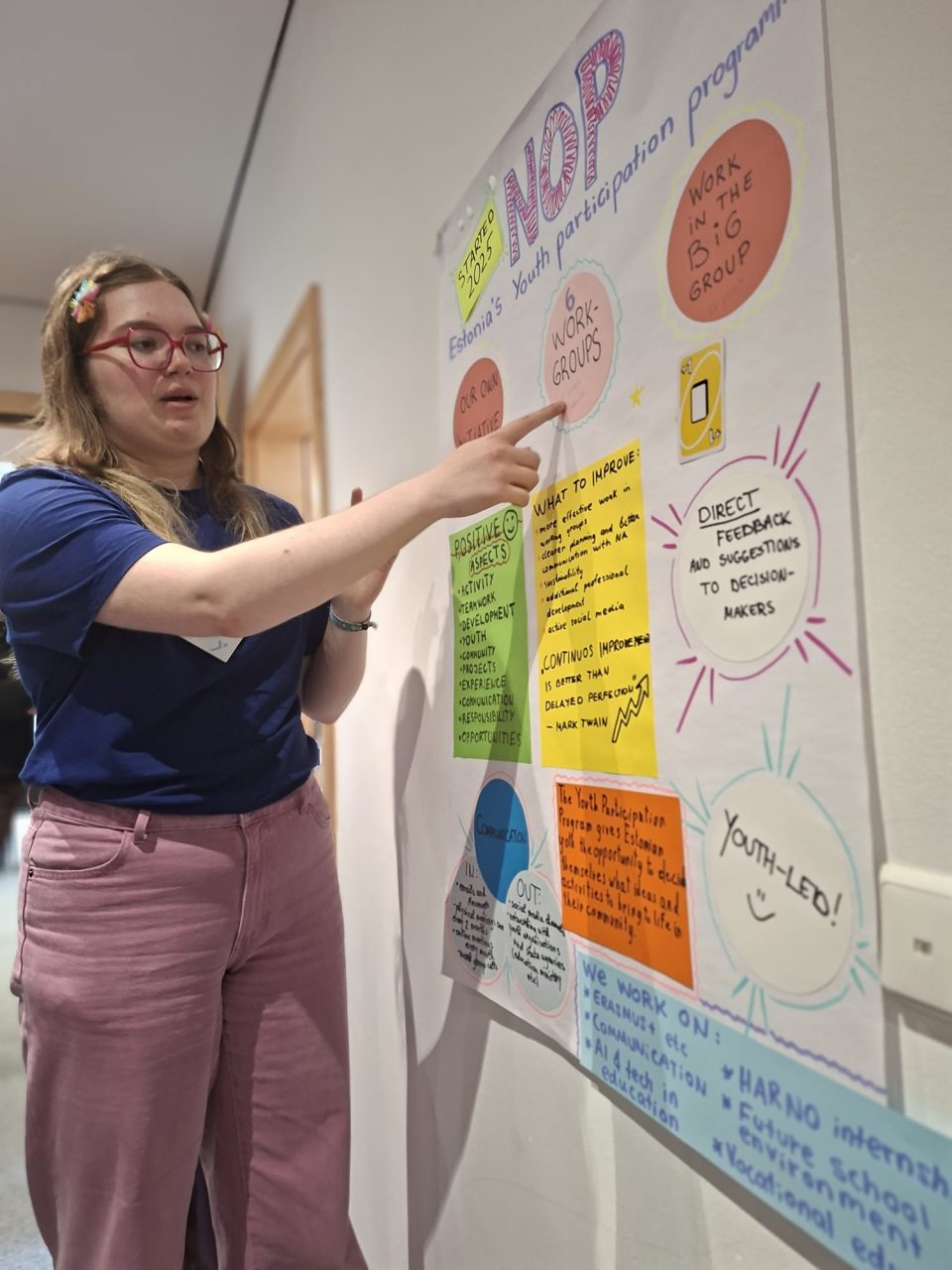
For her, the main takeaway was that youth participation looks different and is approached differently in every country. While Germany has a Youth Advisory Board and Estonia has NOP (Noorte Osalusprogramm, or Youth Participation Programme), young people in some other countries have very limited opportunities to get involved.
“This was an important insight because it underlined that there is no single model for meaningful youth participation. Processes, guidelines, and structures need to remain adaptable and sensitive to different realities and contexts,” commented Hannah Sattlecker, the Youth Participation Coordinator from SALTO PI.
This diversity of experiences became one of the event’s most important discussion points.
The “Eight Golden Rules” for meaningful youth participation in National Agencies
A major outcome of the event was the creation of the “Eight Golden Rules for Youth Participation”, developed collaboratively by participants during working groups. The rules focused on practical ways to make youth participation in National Agencies more meaningful, accessible and transparent.
-
Include diverse young people.
Recruit young people with different abilities, backgrounds, identities, and experiences, and rotate participation over time so involvement stays fresh and representative.
-
Design with young people, not only for them.
Promote co-creation and avoid tokenistic participation, which is a recurring concern for many young people
-
Keep access simple.
Use a clear, low-barrier application process and remove unnecessary administrative obstacles.
-
Make roles and processes clear.
Define responsibilities, decision-making space, personal and reachable contacts, and rules for any youth participation mechanism, and publish this information openly and accessible.
-
Be transparent from the start.
Explain the purpose, limits, timeline, and expected influence of the mechanism so expectations are realistic.
-
Provide proper support.
Ensure coordination, logistics, reimbursement, accessibility, and recognition for both young participants and the staff supporting them.
-
Show impact.
Turn feedback into visible action, explain what was taken up, and explain why some suggestions could not be implemented. Offer clear and structured reporting about the results for internal and external stakeholders
-
Treat young people as partners.
Recognize young people bringing lived expertise in their own right, while valuing the role and experience of NA staff.
“Young people are listened to only formally”
Many discussions focused on why young people often feel excluded from decision-making processes, even in organisations that claim to prioritise participation.
For Mihhail Semiyanov from the Estonian Education and Youth Board’s Youth Participation Programme NOP, one of the biggest problems is performative participation also known as tokenism.
“Young people often feel excluded because of a lack of trust and meaningful support. This can happen at school, within local government, or at national level. When they are not genuinely involved in shaping the environments and decisions that directly affect them, they lose their sense of ownership and belonging. In my experience, one of the biggest disappointments for young people is realising that their ideas are only listened to formally, without any real intention to act on them,” he explained.
Mihhail admits that youth participation is becoming an increasingly popular focus for many institutions, which he sees as positive in theory. “However, participation is too often reduced to procedures, strategies, or symbolic consultations, while the human side of participation, built on trust, respect, and honest dialogue, is overlooked,” he emphasised.
Several participants pointed out that institutions sometimes approach youth participation as a requirement or trend rather than as a genuine partnership.
“People working with young people should stop being afraid of young people’s opinions and initiatives. Meaningful participation starts with a genuine willingness to improve young people’s lives rather than simply fulfilling an institutional requirement. Young people are far more willing to contribute when they feel that institutions, councils, or decision-makers are open to discussion and ready to treat them as equal partners,
Transparency matters
Another recurring theme was transparency and communication. Participants highlighted that many young people lose motivation when they cannot see what happens with their input or whether their ideas had any impact.
Veronika Hagl from EuroPeers Germany, described this clearly: “Even when proposals are made, the outcome is not clear or not visible at all. Transparency is important to stay motivated to lobby for young people.”
“It is also important to better understand the actual needs of young people before making decisions or communication campaigns. Too often, institutions create solutions first and only afterwards try to involve young people. Instead, participation should begin at the earliest stages of discussion. Even small actions, such as giving feedback on youth proposals, explaining why certain ideas cannot be implemented, or involving young people in planning rather than only consultation, can significantly increase trust and engagement,” Mihhail added.
Participants also reflected on the perception that institutions and decision-makers can sometimes feel distant or inaccessible.
One recommendation discussed repeatedly was the need for more direct and approachable communication channels between institutions and young people. This includes clearer feedback processes, more regular dialogue, and less bureaucratic barriers.
Kathrin also emphasised accessibility saying young people should be treated as equals: “Really listen to them when they talk about their experiences and give their honest views on an issue. Access to organisations that engage young people should be made easier, with less bureaucracy and stronger presence on the platforms young people actually use.”
Practical exercises and difficult conversations
The programme combined discussions with practical workshops, roleplays and co-creation sessions. One exercise simulated conversations between young people and decision-makers, highlighting the communication barriers that often exist in institutional settings.
While humorous at times, the exercise reflected real frustrations participants have experienced when trying to advocate for change.
Participants also explored how research and evidence can strengthen advocacy work. Mihhail highlighted the workshop “How to use research for advocacy” as one of the most useful sessions of the event, especially for organisations looking to make stronger arguments for policy change.
Networking also played an important role. Informal exchanges helped participants discover new participation models, compare structures across countries, and build future collaborations.
For Kathrin, a conversation with a representative from the French National Agency led to a new connection with active French EuroPeers near her region.
“These impulses might lead to more National Agencies actively engaging with youth,” Veronika reflected after meeting participants from different networks and structures.
Room for improvement
Hannah Sattlecker highlighted several key areas where improvement is needed when it comes to the involvement of young people in institutional decision-making and the full recognition of participation as a democratic right.
- Creating more spaces for cooperation
Young people and institutions need more regular opportunities to work together directly on improving involvement processes, beyond existing mechanisms such as the EU Youth Dialogue. - Improve communication and trust
Open, transparent, and approachable communication between institutions and young people is essential for building trust and meaningful collaboration. - Use existing knowledge better
Many good practices, lessons learned, and successful participation models already exist, but they are not always shared or used effectively. More knowledge-sharing and peer learning is needed. - Shifting mindsets towards youth involvement
Even small steps toward more meaningful involvement can make a real difference.
Participation at the core of the work of the German National Agency
Marlene Mayer from the German National Agency explains that youth participation has been a core part of its work for many years. Alongside its long-standing cooperation with the EuroPeers network in Germany, the agency established a Youth Advisory Board in 2023 to involve young people from diverse backgrounds in programme implementation at the national level. According to Mayer, the initiative has been a valuable learning process for both the agency and the young participants, helping to strengthen meaningful participation. An evaluation report on the first cycle of the Youth Advisory Board (2023–2025) is available online.
“Our aim for the future, as far as I can answer that, is, among other things, to further strengthen the structures we have been able to build so far and to continue integrating young people more systematically into our work and decision-making processes, while always being transparent about the boundaries,” she reveals future plans.
“To do so, it is crucial that we continue learning together with young people, encourage them to learn from one another, as in You(th)4Participation 2026 event. We as a National Agency continue learning from other National Agencies, SALTO Resource Centres through our SNAC New Power in Youth, and cross-sectorally from other colleagues, such as the Participation Contact Points, as well as stakeholders from the field,” Marlene adds.
Participation as a democratic right
One of the strongest conclusions from the meeting was that youth participation should not be treated as symbolic or optional. Participants repeatedly argued that young people should be recognised as legitimate partners in shaping programmes, institutions and democratic processes.
“Youth participation is important because listening to young people and other target groups makes programmes and activities more relevant to their needs. It also makes the work more effective, as young people bring experiences and expertise that institutions may not have. Looking ahead to the next Programme Generation, meaningful youth participation at different levels, including programme implementation, will likely remain essential,” Marlene says.
“Creating spaces and opportunities for young people to share their perspectives and help shape developments that affect them is important not only for programme quality, but also for strengthening their engagement and sense of involvement,” she concludes.
As discussions in Bonn demonstrated, young people are not asking simply to be included for appearance’s sake. They want transparency, shared responsibility and power, and the possibility to actively shape the systems that affect their lives. And perhaps most importantly, meaningfully supporting young people’s participation means everybody wins. Youth participation is a right. And it also brings real value for institutions who practice it.
Resources worth exploring
Do you want to explore more and use practical tools and resources to strengthen youth participation? Here are some resources which will support improving the quality of youth participation.
The recently published “Quality Standards for Meaningful Youth Participation” complements the Youth Participation Strategy and offers guidance for organisations aiming to improve participation practices.
Three newly published Inspiration Stories from the Estonian and Latvian National Agency as well as from SALTO Inclusion & Diversity offer further practical inspiration and honest reflection on how to involve young people in an institutional context in different ways.
-
The journey of youth participation in the Latvian National Agency
participationpool.eu -
Young People Unfamiliar with the EU Youth Programmes amp up the work at the Estonian National Agency
participationpool.eu -
Doing inclusion differently: How young people with fewer opportunities shaped the SALTO I&D Forum
participationpool.eu
The Engage Youth platform is a useful tool for organisations trying to identify which youth participation methods best fit their own context. The platform includes practical examples, implementation guidance and concrete tools for developing participation structures.
Finally, a step-by-step guide on involving young people, developed for National Agencies and SALTO Resource Centres, is currently in the works. It is planned to be ready in the upcoming months.
You(th)4Participation is an event organised in an effort to encourage the right of young people to participation in decisions affecting them and to implement Aim 5 of Youth Participation Strategy “to encourage National Agencies and other actors to involve young people when making decisions about the management and implementation of the programmes, and to take a quality approach to youth participation when doing so”.
We are grateful to Kathrin, Mihhail and Veronika who contributed to this article with very valuable insights and reflections as well as to all young people who participated in You(th)4Participation, sharing their experiences and knowledge and by doing so inspire us, National Agencies and other institutions.
We are also very thankful to the youth-led prep team of You(th)4Participation, who did a fantastic job in planning and co-organising the event, as well as to JUGEND für Europa for its efforts in organising and hosting the event and for its strong support of youth involvement in institutional decision-making.